
Olabi Sutras
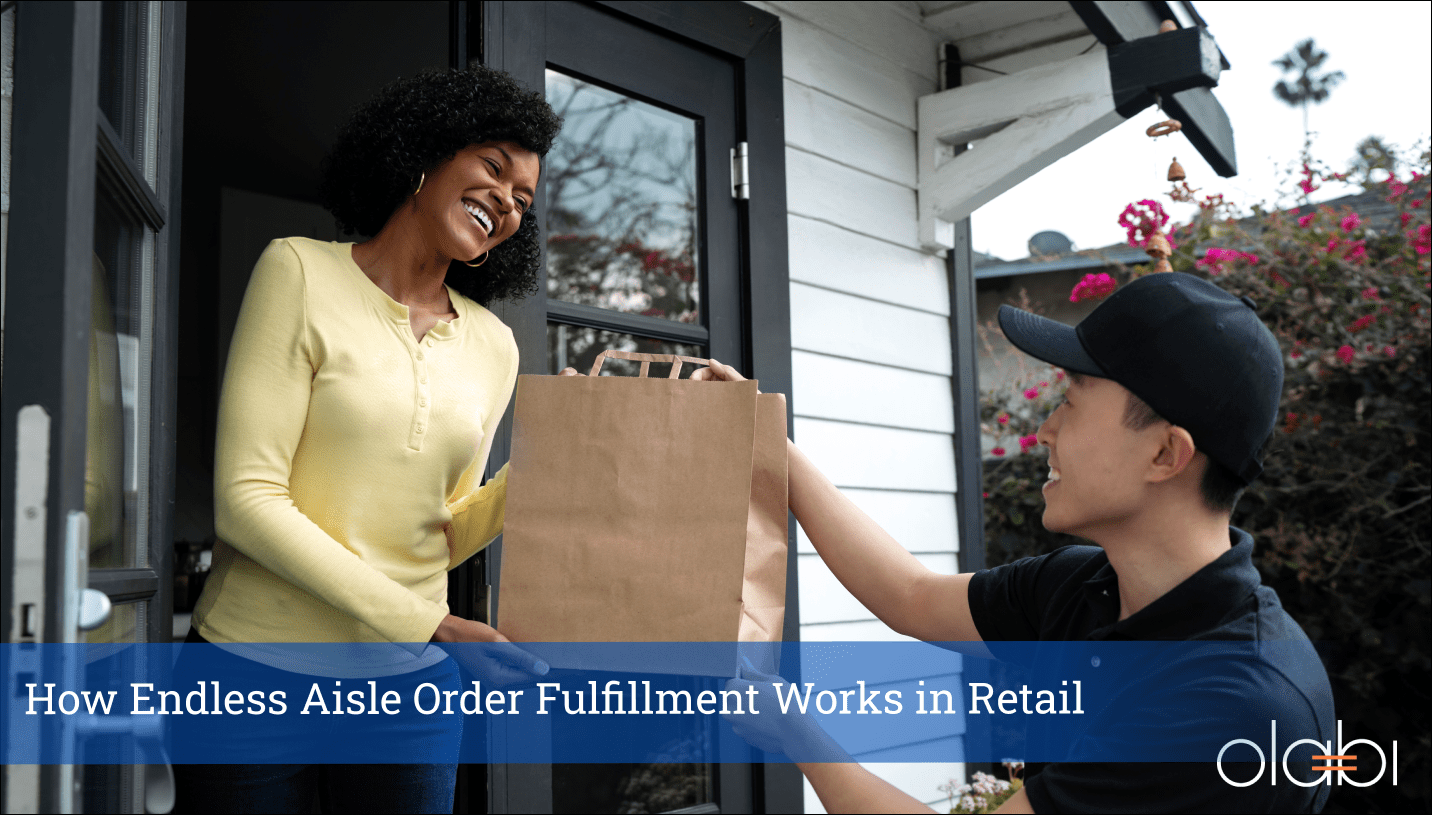
How Endless Aisle Order Fulfillment Works in Retail
Today’s shoppers expect more than just convenience; they expect certainty. When customers walk into a store or browse online and discover that a product is out of stock, it’s not just a missed sale; it’s a missed opportunity to build loyalty. This is where Endless Aisle order fulfillment comes in.
Endless Aisle empowers retailers to offer products beyond what’s available at a specific location by tapping into inventory across warehouses, other stores, franchise outlets, or third-party partners. However, enabling this kind of flexibility isn’t just about displaying more SKUs on a screen; it requires a smart, connected, and efficient order fulfillment strategy behind the scenes.
In this blog, we’ll explore how Endless Aisle order fulfillment works in practice, what fulfillment methods (or Order Fulfillment Networks – OFNs) are involved, how they vary across different store formats and ownership models, and what technology and operational frameworks make it all possible. Whether you’re managing a single brand store or a national retail chain, understanding how to implement Endless Aisle order fulfillment effectively can help you maximize inventory, increase conversions, and deliver on the promise of unified commerce.
What is Endless Aisle Order Fulfillment?
Endless Aisle order fulfillment refers to the process of completing a customer’s purchase by sourcing products from locations beyond the immediate store, such as other stores, warehouses, or third-party suppliers, when the item is not physically available on-site. This model ensures that the customer can still complete their purchase, even if the desired product is out of stock at that specific location.
The core idea behind Endless Aisle order fulfillment is simple: don’t lose the sale just because the shelf is empty. By connecting various inventory points through an integrated system, retailers can fulfill orders dynamically from the most suitable location based on availability, proximity, and speed.
This approach brings several business advantages:
- Saves the sale by preventing stockouts from turning into lost revenue.
- Improves inventory utilization by leveraging underused stock across the network, helping reduce overstock and markdowns.
- Elevates the customer experience (CX) by offering broader product availability, faster delivery options, and greater shopping flexibility.
Endless Aisle transforms every store into a digital gateway to the entire inventory ecosystem, turning intent into purchase, no matter where the product physically sits.
Key Fulfillment Models for Endless Aisle Orders
Implementing Endless Aisle order fulfillment effectively requires a flexible and responsive order fulfillment strategy that can route orders to the most efficient source. These sources, or Order Fulfillment Networks (OFNs), represent the different locations and methods by which a customer’s order can be fulfilled. Here are the most common fulfillment models:

- Ship from Warehouse / Distribution Center (DC)
This is the most traditional and centralized fulfillment method. Orders are routed to the nearest warehouse or distribution center, where stock is usually abundant and optimized for picking, packing, and shipping.
- Ideal for fast-moving inventory or products not stocked in-store
- Supports consistent delivery timelines with established logistics
- Works best when stores don’t carry deep inventory levels
- Ship from Store (Store-to-Consumer)
This method allows the order to be fulfilled from a nearby store, rather than a central warehouse. It’s particularly effective for improving delivery speed and reducing logistics costs.
- Leverages store stock to fulfill nearby orders quickly
- Helps reduce store-level overstock and improve inventory turnover
- Requires accurate inventory visibility and trained store staff
- Cross-Store Fulfillment
In this model, the order is fulfilled by a store other than the one where the customer placed the order, commonly used when the local store is out of stock, but another within the region has availability.
- Enables a networked approach to in-store inventory
- Works well in metro areas or regions with multiple store locations
- Depends on real-time stock sync and store-to-store coordination
- Franchise Store Fulfillment
When franchise stores are part of the Endless Aisle order fulfillment ecosystem, they can also act as fulfillment nodes. However, this model requires clearly defined operational rules and partner alignment.
- Allows wider inventory access across a distributed franchise network
- Needs alignment on margins, return policies, and fulfillment responsibilities
- Requires backend systems that support franchise-level visibility and control
- Marketplace Fulfillment (Brand or Third-Party Seller)
If Endless Aisle extends to products sold by third-party sellers or brand partners, those sellers can directly fulfill the order. This model is common in drop-ship arrangements or extended assortment catalogs.
- Expands product offerings beyond in-house inventory
- Involves integration with seller inventory and logistics systems
- Useful for lifestyle brands with curated collections or vendor-partners
- Click & Collect (BOPIS / BOSS)
In this consumer-preferred model, customers place an order through Endless Aisle and pick it up at a store, either the same store (if available) or another location.
- BOPIS: Buy Online, Pick Up In Store
- BOSS: Buy Online, Ship to Store
- Reduces delivery time for customers and shipping costs for retailers
- Ideal for customers who prefer local pickup and instant gratification
Technology Backbone for Endless Aisle Order Fulfillment
Delivering a seamless Endless Aisle order fulfillment experience isn’t just about showing more products, it requires a robust, interconnected tech infrastructure that ensures accurate, efficient, and real-time order fulfillment. Here are the key components that power Endless Aisle order fulfillment:
Order Management System (OMS)
Acts as the brain of the fulfillment engine, smartly routing orders to the optimal node based on location, inventory, delivery type, cost, and serviceability.
POS + Inventory Sync
Ensures real-time inventory visibility across all stores, warehouses, franchise outlets, and third-party sellers. Prevents stockouts, over-promises, or delays.
Logistics Integration
Connects with shipping partners, local delivery providers, and reverse logistics systems to streamline order dispatch, tracking, and returns.
Staff Interfaces for Picking/Packing
Enables store associates to receive, pick, pack, and mark orders as fulfilled through intuitive mobile or POS-linked dashboards.
Analytics Dashboard
Offers centralized reporting on fulfillment performance, tracking metrics like fulfillment time, order completion rates, cancellations, and node performance.
Benefits of a Well-Executed Endless Aisle Order Fulfillment Strategy
When implemented with the right technology, processes, and stakeholder alignment, Endless Aisle can unlock significant value across the retail business:
Higher Sell-Through and Lower Markdowns
Move inventory faster by exposing it to a broader demand pool, minimizing aged stock, and unnecessary discounting.
Increased Order Conversion and Reduced Lost Sales
Keep the sale alive even when shelves are empty, improving conversion and customer satisfaction.
Better Customer Experience
Shoppers enjoy more product choices, faster delivery options, and convenient fulfillment methods like pickup or local delivery.
Efficient Use of Distributed Inventory
Reduce inventory holding costs by balancing supply and demand across the entire network, no stock sits idle.
Stronger Franchise and Partner Engagement
By including franchise or partner locations in the fulfillment network, Endless Aisle creates more participation, shared revenue, and deeper ecosystem integration.
Common Challenges to Address in Endless Aisle Order Fulfillment
While the Endless Aisle order fulfillment model brings immense potential to elevate retail operations, its success hinges on overcoming a few operational and structural challenges. Retailers must proactively tackle the following hurdles to ensure seamless execution:
- Inventory Inaccuracy at the Store Level
Endless Aisle order fulfillment heavily relies on real-time stock visibility. If store-level inventory isn’t accurately reflected in the system, it can lead to order failures, customer dissatisfaction, and fulfillment delays. Regular stock audits and automated stock sync with POS are critical to solving this.
- Staff Training and Ownership
Store staff often play a frontline role in picking, packing, and fulfilling Endless Aisle orders. Without proper training, clear workflows, and accountability, execution may falter, resulting in slow fulfillment or errors. A user-friendly staff interface and performance incentives can help build ownership.
- Franchise Partner Resistance
Franchise stores may hesitate to participate in Endless Aisle order fulfillment due to unclear benefit-sharing, added workload, or return complexities. Addressing this requires well-defined agreements, fair compensation models, and operational support from the brand.
- Complexity in Logistics Integration
Coordinating multiple fulfillment nodes, warehouses, stores, franchises, and sellers adds layers to logistics. From last-mile delivery to reverse logistics, integration must be airtight to avoid bottlenecks. A modular, API-driven logistics platform helps streamline these touchpoints.
- Customer Communication and Tracking
Customers expect transparency and control. Without real-time order status updates, estimated delivery timelines, or store pickup alerts, trust is eroded. Integrating notification systems (email/SMS/WhatsApp) and live tracking can significantly improve the post-purchase experience.
Conclusion
Endless Aisle order fulfillment is no longer a futuristic concept, it’s a practical, revenue-saving solution that empowers retailers to convert every customer interaction into a sale, regardless of physical shelf limitations. By intelligently routing orders through multiple fulfillment nodes, warehouses, stores, franchise partners, or marketplaces, retailers can optimize inventory, enhance customer experience, and unlock greater operational agility.
However, the success of Endless Aisle hinges on getting the fundamentals right: real-time inventory accuracy, a robust Order Management System, logistics integration, and stakeholder alignment across owned and partner networks. With thoughtful implementation and ongoing refinement, Endless Aisle order fulfillment can become a key pillar of modern omnichannel retail, bridging the gap between digital promise and physical reality.
Schedule a demo with Olabi to explore how Endless Aisle can drive revenue and optimize your retail strategy.
Share This Story, Choose Your Platform!
About the Author: Olabi

