
Olabi Sutras

How Automation in Retail Industry is Transforming Store Operations
The automation in retail industry is rapidly transforming how businesses operate, making store operations more efficient, cost-effective, and customer-centric. From AI-driven inventory management to cashier-less stores, automation is helping retailers streamline operations, reduce errors, and enhance the overall shopping experience.
With growing consumer expectations for speed, convenience, and personalization, retailers must embrace automation in retail industry to stay competitive. Automated checkout systems, AI-powered recommendations, and real-time inventory tracking are just a few ways retailers are using automation to optimize efficiency and improve customer satisfaction.
This blog will explore the key areas of automation in retail industry that are revolutionizing store operations, from automated order fulfillment to dynamic pricing strategies. By integrating these technologies, retailers can enhance productivity, minimize losses, and provide a seamless shopping experience.
Let’s dive into how automation in retail industry is shaping the future of shopping and why retailers need to embrace it now.
Key Areas of Automation in Retail Industry
Smart Checkout & Payment Automation
One of the biggest transformations brought by automation in retail industry is the checkout process. Long queues and slow billing are becoming a thing of the past with technologies like:
- Self-checkout kiosks & cashier-less stores – Shoppers can scan, bag, and pay for items without needing a cashier. Retail giants like Amazon Go use Just Walk Out technology, where sensors and AI detect what customers take and charge them automatically.
- Mobile POS & contactless payments – Store associates use handheld M-POS systems, allowing customers to pay from anywhere in the store. Digital wallets and UPI payments have further streamlined transactions.
???? Why it matters: Customers enjoy faster, frictionless checkouts, while retailers reduce labor costs and improve efficiency.
Automated Inventory & Stock Replenishment
Automation in retail industry has completely changed how retailers manage stock, ensuring that shelves are always filled with the right products at the right time. Key technologies include:
- AI-powered inventory tracking – Smart sensors, RFID tags, and IoT devices monitor stock levels in real time, predicting demand and preventing stockouts or overstocking.
- Automated restocking systems – AI analyzes sales trends and automatically places orders to suppliers, ensuring high-demand products are always available.
???? Why it matters: No more out-of-stock disappointments for customers, and retailers minimize waste while maximizing sales.
Personalized Customer Engagement with AI & Chatbots
The automation in retail industry is enhancing how brands interact with customers by leveraging AI-driven personalization and chatbots.
- AI-powered recommendation engines analyze purchase history and browsing behavior to offer tailored product suggestions.
- Chatbots & virtual assistants provide 24/7 customer support, answering queries, tracking orders, and handling returns in real time.
- Automated loyalty programs reward customers based on purchase patterns, boosting retention and engagement.
???? Why it matters: Hyper-personalization drives conversions and strengthens customer loyalty.
Automated Pricing & Dynamic Promotions
Pricing strategies are crucial in retail, and automation in retail industry is enabling retailers to stay competitive with dynamic pricing solutions.
- AI-driven pricing algorithms analyze demand, competitor pricing, and stock levels to adjust prices in real time.
- Automated discounts & promotions ensure the right offers reach the right customers at the right time.
- Electronic shelf labels (ESL) update prices instantly, reducing manual errors and improving pricing accuracy.
???? Why it matters: Retailers can maximize profits while offering customers the best possible deals.
Smart Supply Chain & Logistics Automation
The automation in retail industry is revolutionizing supply chain operations, ensuring faster deliveries and reduced operational costs.
- Automated warehouses & robotic fulfillment centers improve picking, packing, and shipping efficiency.
- AI-driven demand forecasting helps retailers optimize stock levels, reducing overstocking and stockouts.
- Last-mile delivery automation uses drones and autonomous vehicles to speed up order fulfillment.
???? Why it matters: Faster deliveries and optimized inventory management improve customer satisfaction and reduce logistics costs.
Store Security & Loss Prevention
Retailers are leveraging automation in retail industry to enhance security and prevent theft with AI-powered surveillance and fraud detection systems.
- Computer vision technology & smart cameras can detect suspicious behavior and alert store security.
- RFID-based anti-theft systems track product movements and reduce shrinkage.
- Automated fraud detection in payment systems flags unusual transactions to prevent financial losses.
???? Why it matters: Reduced shrinkage and fraud improve profitability while ensuring a safe shopping environment.
Automated Workforce Management
Retailers are streamlining workforce operations using automation in retail industry to optimize staffing and improve efficiency.
- AI-powered scheduling tools predict foot traffic and assign shifts accordingly.
- Automated payroll & attendance tracking ensure accuracy and compliance with labor laws.
- Training automation through AI-driven platforms helps upskill employees with minimal manual intervention.
???? Why it matters: Increased efficiency, lower labor costs, and better employee productivity lead to improved store operations.
Benefits of Automation in Retail Store Operations
Improved Operational Efficiency & Reduced Manual Workload
Automation streamlines retail operations by handling repetitive tasks like billing, inventory tracking, and order processing. AI-driven systems ensure real-time updates, reducing human errors and allowing staff to focus on customer service.
Enhanced Customer Experience Through Seamless Shopping Journeys
From smart checkout systems to AI-driven product recommendations, automation personalizes and accelerates the shopping experience. Customers enjoy shorter wait times, personalized offers, and a more efficient purchase process.
Reduction in Shrinkage & Inventory Losses
RFID tracking, automated stock monitoring, and AI-powered fraud detection help minimize theft, errors, and stock discrepancies. This ensures better inventory control and reduced financial losses.
Cost Savings & Higher Profitability for Retailers
By optimizing staffing, reducing waste, and preventing stockouts, automation leads to significant cost savings. AI-driven pricing models also help retailers maximize revenue by adjusting prices based on demand and competition.
Real-World Example: Amazon Go
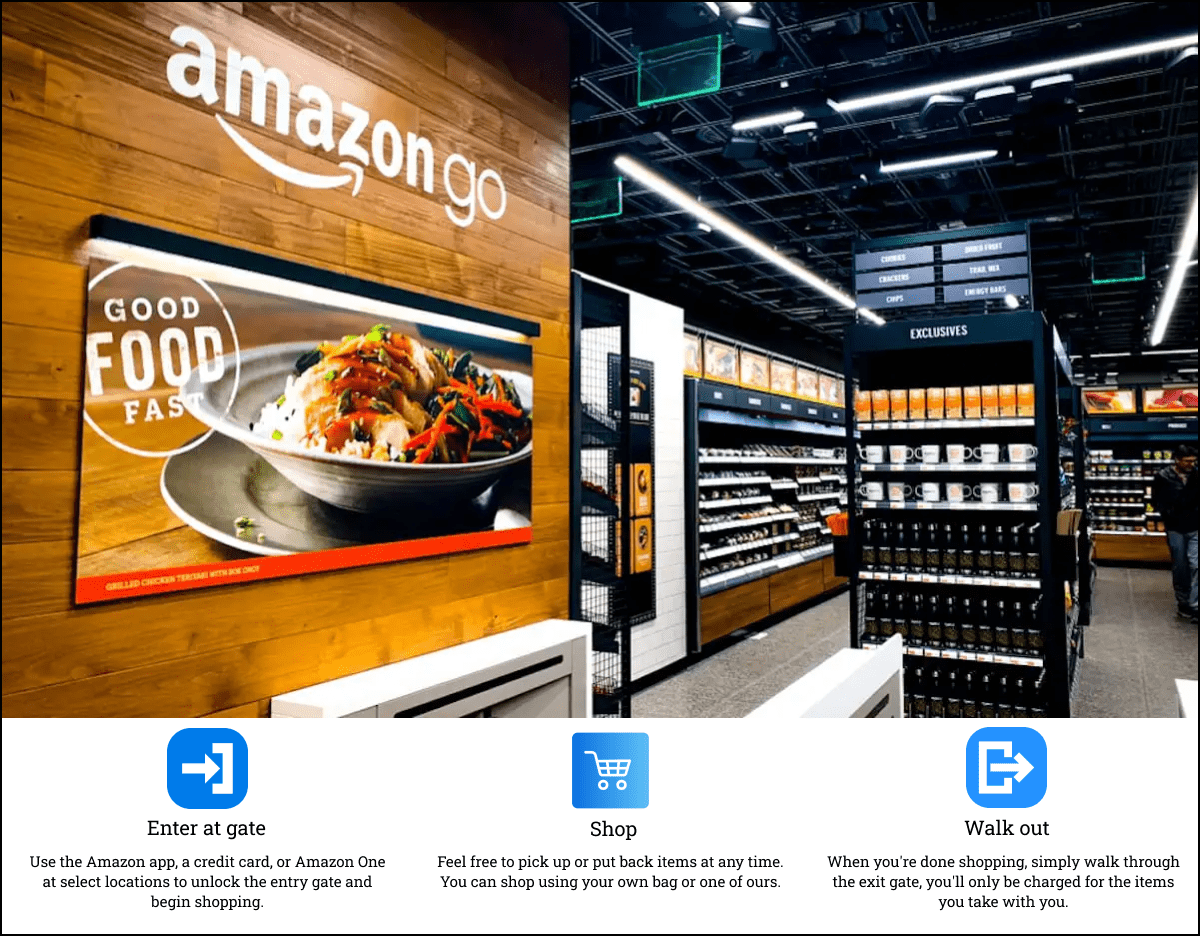
Amazon Go is a prime example of automation in the retail industry, offering a checkout-free shopping experience using AI, computer vision, and sensor technology. Customers scan the Amazon Go app to enter, pick up items, and walk out, the system automatically charges their account without the need for a cashier.
Key Benefits:
- No checkout lines – Faster and more convenient shopping.
- Lower labor costs – Reduces reliance on cashiers.
- Minimized shrinkage – AI-powered tracking prevents theft.
- Data-driven insights – Analyzes shopping behavior for better inventory management.
Challenges and Considerations for Automation in Retail Industry
High Initial Investment & Implementation Costs:
Adopting automation in retail industry requires a significant upfront investment in hardware, software, and infrastructure. Retailers must carefully evaluate ROI and long-term cost savings before implementation.
Balancing Automation with Human Interactions:
While automation enhances efficiency, excessive reliance on technology can reduce personalized customer experiences. Finding the right balance between AI-driven processes and human touch is crucial for customer satisfaction.
Data Security & Privacy Concerns:
Automated systems collect vast amounts of customer data, making data security a top priority. Retailers must invest in robust cybersecurity measures to protect customer information and comply with privacy regulations.
Training Employees for Technology Adoption:
Successful automation in retail industry depends on employees adapting to new technologies. Proper training programs and user-friendly automation tools ensure smooth transitions and minimize resistance to change.
Conclusion
The automation in retail industry is revolutionizing store operations, enhancing efficiency, reducing costs, and delivering seamless customer experiences. While the benefits are undeniable, retailers must navigate challenges like high implementation costs, data security, and workforce adaptation to maximize automation’s potential. Striking the right balance between technology and human interactions is key to long-term success.
As automation continues to evolve, retailers that strategically implement and optimize automation solutions will gain a competitive edge in an increasingly digital marketplace.
Ready to see how modern retail solutions can transform your business? Schedule a demo with Olabi today and discover how our technology can streamline your operations and drive growth!
Share This Story, Choose Your Platform!
About the Author: Olabi

