
Olabi Sutras
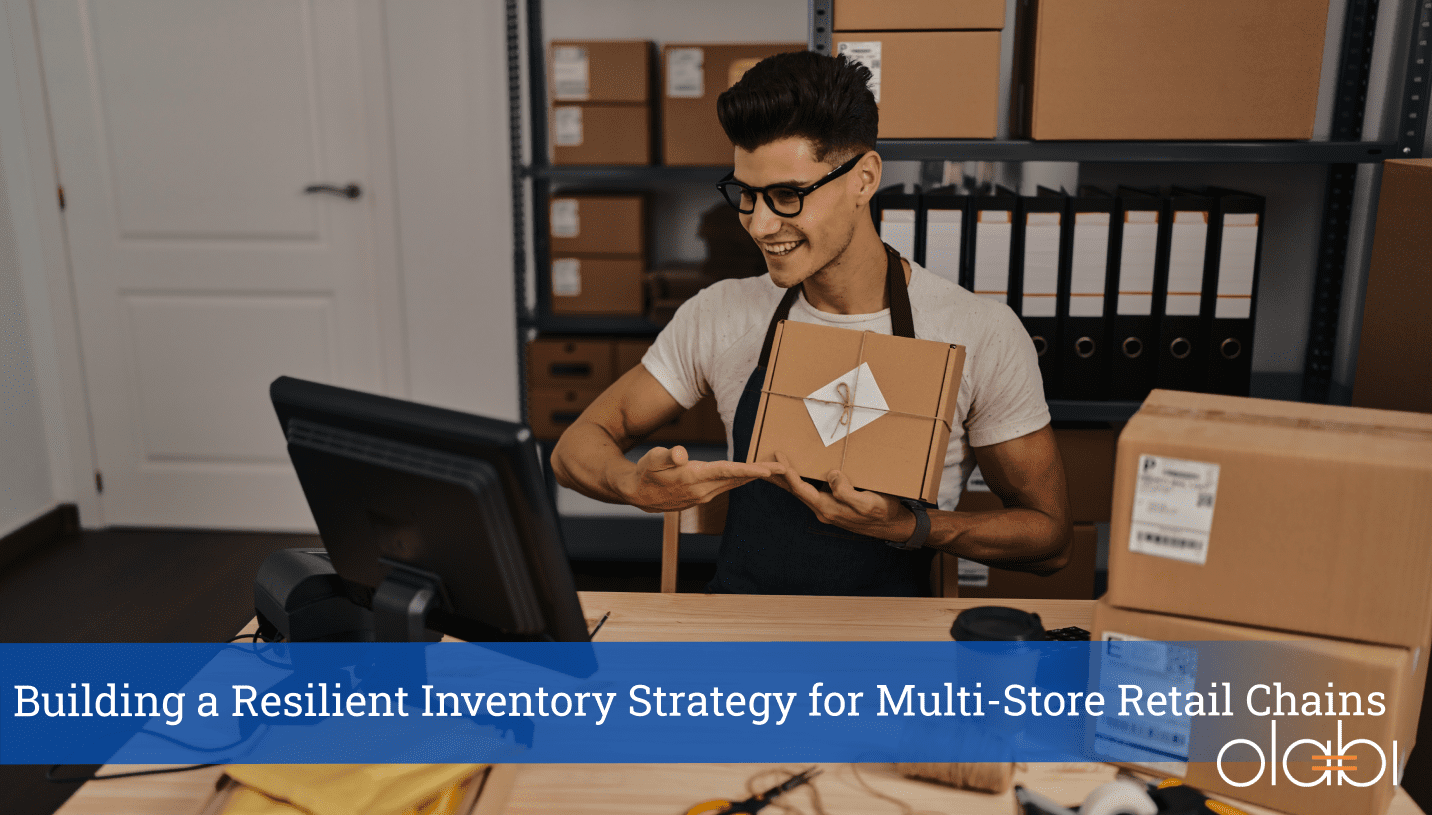
How to Build a Resilient Inventory Strategy for Multi-Store Retail Chains
A resilient inventory strategy is a structured, technology-driven approach that enables multi-store retail chains to maintain optimal stock levels, respond quickly to disruptions, and consistently meet customer demand across locations. Unlike single-store operations, multi-store retailers manage far greater complexity, varying regional demand patterns, different customer profiles, unpredictable seasonality, and diverse logistical constraints.
In such an environment, real-time inventory visibility becomes non-negotiable. Retailers need an accurate, unified view of stock across every store, warehouse, and sales channel to avoid costly issues like overstocking, stockouts, and delayed replenishment.
With retail becoming increasingly omnichannel, the need for technology-led inventory planning is stronger than ever. Modern systems empowered by automation, analytics, and intelligent forecasting are redefining how retailers build resilience, improve operational efficiency, and deliver consistent product availability across the network.
The Unique Challenges of Multi-Store Inventory Management
Managing inventory across multiple retail locations comes with its own set of complexities that single-store operations rarely encounter. One of the biggest challenges is uneven sales velocity, what sells fast in one store may sit on the shelves in another. This is often influenced by regional trends and store-specific customer preferences, making uniform stocking strategies ineffective.
These variations frequently lead to stock imbalances, where some stores struggle with overstock while others face recurring stockouts of the same product. Such disparities are often worsened by manual or fragmented replenishment processes, which slow down stock transfers and limit a retailer’s ability to react quickly to demand shifts.
Additionally, ensuring inventory accuracy across POS systems, online channels, and marketplaces becomes more difficult as store counts increase. Without a unified view of stock, retailers risk misaligned availability, order cancellations, and lost sales.
Building the Foundation: Centralized Inventory Visibility
A resilient multi-store inventory strategy begins with centralized, real-time visibility. When retailers can view stock levels across every store, warehouse, and channel at any moment, they gain the control needed to respond quickly to demand shifts and prevent costly inventory gaps.
This level of visibility is only possible when systems such as POS, ERP, and WMS are unified. Instead of operating in silos, these platforms share data seamlessly, ensuring every sale, return, transfer, or fulfillment update is instantly reflected across the entire network.
Centralized visibility also improves store-to-store transparency, enabling retailers to:
- Reduce stockouts by quickly locating available inventory
- Transfer products efficiently based on actual demand
- Make faster, data-backed decisions at both store and HQ levels
With accurate, up-to-the-minute stock information, demand forecasting and replenishment become significantly more precise. Retailers can plan smarter, reduce inventory risk, and keep products flowing where they’re needed most.
Designing an Effective Replenishment Strategy
A strong replenishment strategy is central to building resilient multi-store inventory operations. It ensures every outlet receives the right products, at the right time, and in the right quantities, without overstocking or risking stockouts.
- Store-Level Replenishment Logic
Each store carries its own sales rhythm, customer base, and product movement patterns. A one-size-fits-all approach rarely works.
A smart replenishment model begins by:
- Understanding individual store demand patterns, identifying top sellers, slow movers, and seasonal demand shifts unique to each location.
- Setting clear minimum and maximum stock levels, based on sales velocity and storage capacity. These thresholds help maintain optimal product availability without tying up working capital.
- Automated Reorder Triggers
Automation plays a crucial role in improving accuracy and speed.
By setting inventory thresholds linked to real-time sales velocity, retailers can ensure replenishment triggers fire exactly when needed.
- Orders are initiated automatically once stock drops below the defined level.
- This significantly reduces manual monitoring, minimizes human error, and ensures stores never run too low on fast-moving SKUs.
- Safety Stock Planning
Even the best forecasts can face unexpected disruptions. Safety stock acts as a buffer to absorb uncertainty.
- Retailers must account for lead time variability, especially when suppliers operate from different regions or have inconsistent delivery cycles.
- Safety stock ensures stores remain prepared for demand spikes during festive seasons, promotional events, or sudden trends, protecting sales opportunities.
Leveraging Demand Forecasting for Accuracy
Accurate demand forecasting is the backbone of a resilient multi-store inventory strategy. It helps retailers anticipate what each store will need, before the demand actually hits.
- Historical sales data, trend patterns, and seasonality form the core inputs. Analysing these helps retailers understand long-term demand cycles, peak months, and product performance across different times of the year.
- Predictive analytics strengthens planning for:
- New product launches, where early demand prediction helps avoid both surplus and shortages.
- Festive seasons, ensuring stores stay ready for high-traffic periods.
- Regional buying behaviours allow tailored assortments based on local preferences.
Advanced forecasting reduces guesswork and ensures retailers avoid overbuying, which inflates inventory holding costs, and understocking, which leads to lost sales and dissatisfied customers.
A data-driven approach ensures every store gets the right inventory at the right time.
Optimizing Store-to-Store Transfers
Store-to-store transfers are one of the most efficient ways for multi-location retailers to balance inventory strategy without overspending.
Transfers make more sense than fresh procurement when:
- Products are available in excess at another store.
- Demand is location-specific but stocks are unevenly distributed.
- The cost and lead time of procurement are higher than redistribution.
This approach improves product availability while keeping operational costs low.
To make transfers effective, retailers must build clear rules for:
- Transfer eligibility: Which SKUs qualify based on demand, margin, and seasonality.
- Distance considerations: Prioritizing nearby stores for faster, cheaper movement.
- Stock thresholds: Triggering transfers only when sending stores have surplus and receiving stores are nearing minimum stock.
Inventory Health: The Silent Killer of Retail Profitability
Poor inventory strategy health silently drains margins. Monitoring aging stock, dead stock, and inaccuracies is essential for any multi-store retailer.
- Aging Inventory Monitoring
- Track slow-moving SKUs early through age buckets.
- Identify store-specific slow sellers and take quick action.
- Use transfers or targeted promotions before items become non-saleable.
- Managing Dead Stock
- Reduce tied-up capital by clearing non-moving items quickly.
- Use strategies like markdowns, bundling, reallocation to better-performing stores, or liquidation.
- Treat dead stock management as an ongoing process.
- Negative & Ghost Inventory
- Common causes: manual errors, system delays, untracked shrinkage.
- Impact: false availability, customer dissatisfaction, poor buying decisions.
- Fix with: real-time system sync, regular cycle counts, barcode-based processes, and exception alerts.
Empowering Stores With the Right Tools
A resilient inventory strategy depends on how effectively each store can manage stock on the ground. Providing the right tools ensures accuracy, speed, and accountability.
- Mobile Stock Management
- Handheld devices simplify GRN, stock counts, and stock verifications.
- Staff can update inventory from the shop floor without relying on back-office systems.
- Reduces delays and improves real-time accuracy.
- Barcode-Based Audits
- Barcode scanning helps conduct cycle counts quickly and with fewer errors.
- Minimizes manual entry mistakes and improves audit consistency.
- Helps maintain accurate stock levels across multiple locations.
- Real-Time Alerts
- Low-stock notifications prevent sudden stockouts.
- Alerts for high return rates help identify quality issues early.
- Aging inventory reminders prompt timely clearance actions.
Integrating Omnichannel Fulfillment Into Your Inventory Strategy
Omnichannel fulfilment is no longer optional but an important inventory strategy; it’s essential for multi-store retailers aiming to maximize product availability and customer convenience.
Why Multi-Store Retailers Must Support:
- Click & Collect: Drives footfall and allows stores to act as pickup hubs.
- Ship-from-Store: Improves delivery speed by fulfilling online orders locally.
- Endless Aisle: Prevents lost sales by enabling orders from other stores or warehouses.
How Omnichannel Changes Inventory Flow
- Stock must be optimized not just for walk-ins but also for online demand.
- Stores function as micro-fulfilment centres, requiring tighter accuracy.
- Inventory buffers and replenishment rules must adapt to multi-channel demand.
Avoiding Store Overload
- Clear SOPs to balance walk-in service with omnichannel tasks.
- Smart routing of online orders to stores with capacity.
- Tools that simplify pick-pack-ship workflows and avoid staff burnout.
The Role of Technology in Building Resilience
Technology is the backbone of a resilient inventory strategy. For multi-store retailers, it eliminates guesswork, reduces inconsistencies, and ensures real-time accuracy across every location.
Unified Inventory Systems Reduce Silos
Centralized platforms connect POS, ERP, WMS, and eCommerce so all teams work with the same real-time data. This prevents discrepancies and improves decision-making.
Automation Replaces Manual Monitoring
Automated alerts, reorder triggers, and sync processes minimize human error. Stores no longer depend on manual checks to manage replenishment or stock accuracy.
AI-Driven Recommendations
Modern systems use predictive analytics to optimize inventory strategy operations:
- Assortment Planning: Identify what sells best at each store.
- Replenishment: Predict ideal reorder quantities based on velocity and seasonality.
- Markdown Optimization: Reduce excess stock with smart discounting strategies.
How Platforms Like Olabi Help
Solutions like Olabi provide real-time visibility of stock across stores, warehouses, and online channels. Automated flows reduce manual intervention, enabling faster decisions and greater operational stability.
KPIs to Track for Inventory Resilience
To measure the strength of your inventory strategy, retailers should monitor key metrics that reveal accuracy, availability, and efficiency.
- Sell-Through Rate
Measures how quickly products move, helping identify strong vs slow performers. - Stock Turn (Inventory Turnover)
Indicates how efficiently inventory is being sold and replenished. - Fill Rate
Tracks the percentage of customer demand fulfilled without delay, critical for customer experience. - Out-of-Stock Percentage
Shows how often items are unavailable, pointing to gaps in replenishment or forecasting. - Aging Buckets
Helps track how long inventory stays at different age levels, revealing slow movers and potential dead stock. - Store-Level vs Overall Inventory Accuracy
Indicates how closely system stock matches physical stock, vital for omnichannel fulfilment. - Replenishment Cycle Time
Measures how long it takes for stores to receive stock once requested, highlighting operational bottlenecks.
Conclusion
Building a resilient inventory strategy is no longer optional for multi-store retailers, it’s essential. True resilience comes from accurate, real-time data, smart automation, and unified systems that eliminate silos and manual errors. When retailers adopt structured inventory practices, they can dramatically reduce losses, prevent stock imbalances, and ensure products are always available where customers need them.
With the right technology, every store becomes more efficient, every decision becomes faster, and every operation becomes more predictable.
Discover how Olabi helps multi-store retailers build stronger, smarter, real-time inventory operations. Schedule a demo with Olabi now.
Share This Story, Choose Your Platform!
About the Author: Olabi

