
Olabi Sutras
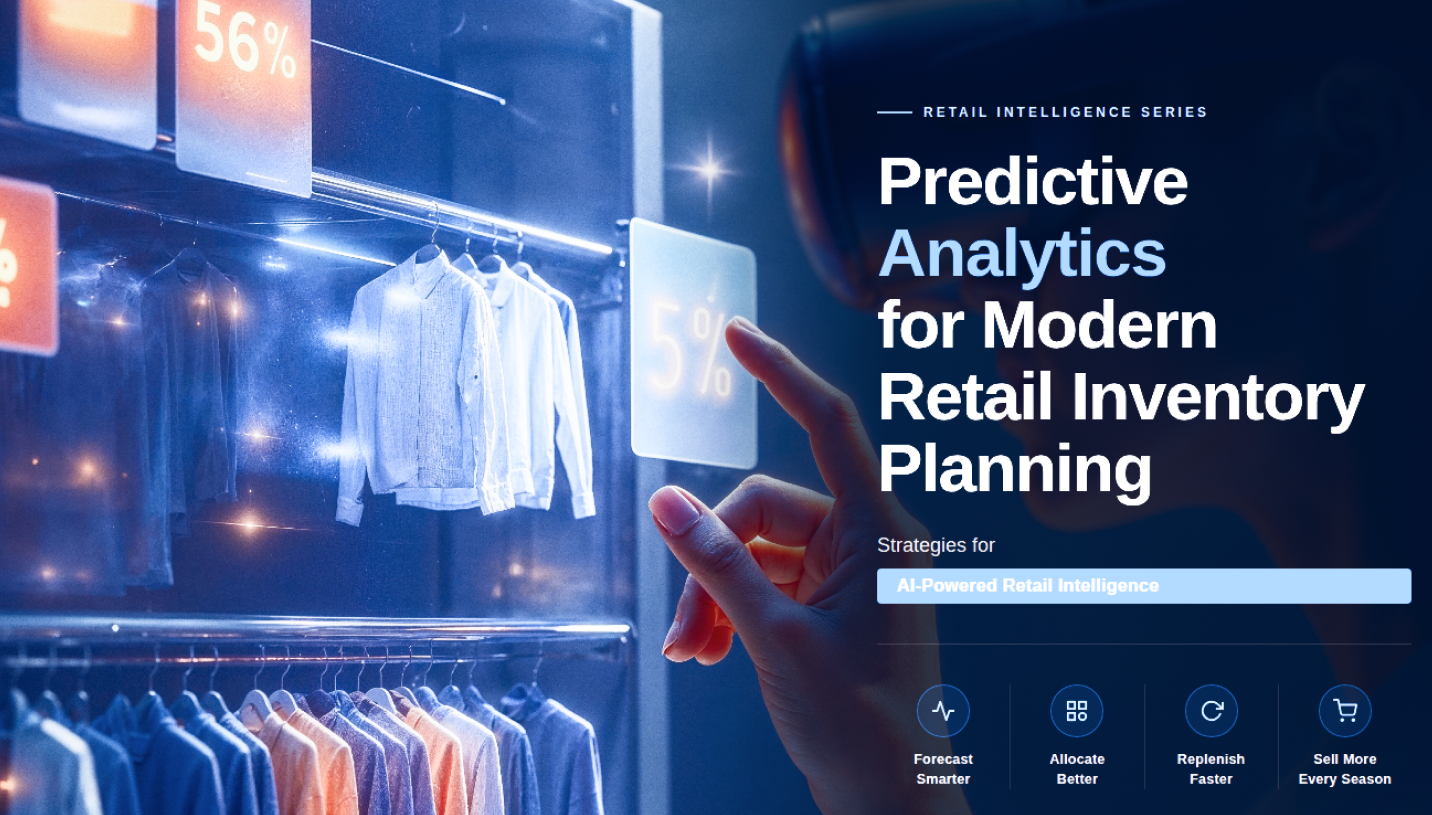
Predictive Analytics for Modern Retail Inventory Planning
Retail inventory planning has become significantly more difficult over the last few years.
Consumer demand shifts faster. Fashion trends change rapidly. Seasonal buying behavior has become less predictable. And omnichannel retail has added an entirely new layer of operational complexity.
Traditional inventory planning models were built for a slower retail environment. Retailers relied heavily on historical sales reports, seasonal buying assumptions, and manual forecasting cycles to make inventory decisions months in advance.
That approach is becoming increasingly unreliable.
Fashion and lifestyle retail now move much faster than traditional planning cycles can handle. A product category can suddenly accelerate because of social media visibility, changing weather conditions, influencer trends, or regional demand shifts. Customer preferences evolve quickly, and retailers often struggle to react before inventory problems begin affecting profitability.
At the same time, omnichannel retail has transformed how inventory needs to be managed.
Customers no longer shop through a single channel. They browse online, purchase in-store, expect real-time stock visibility, and demand faster fulfillment across every touchpoint. Inventory planning can no longer happen separately for stores, warehouses, and eCommerce operations.
This creates major operational challenges.
Retailers now need to manage:
- Faster demand fluctuations
- Cross-channel inventory visibility
- Dynamic replenishment cycles
- Store-level inventory balancing
- Regional assortment variations
- Real-time fulfillment expectations
And in this environment, relying only on historical sales data is no longer enough.
Historical performance can provide direction, but it cannot fully predict future demand patterns in modern retail. Consumer behavior changes too quickly for static forecasting models to remain consistently effective.
This is why predictive analytics is becoming increasingly important in retail inventory planning.
Retailers today are not struggling because they lack data.
They struggle because they react too slowly to the data they already have.
The retailers performing best today are not necessarily the ones carrying more inventory.
They are the ones using data faster, identifying demand shifts earlier, and making inventory decisions with greater operational agility.
Why Retailers Are Investing in Predictive Analytics
Retail inventory planning has become far more complex than it was a few years ago.
Demand cycles are shorter. Consumer behavior changes faster. Omnichannel retail has increased operational complexity across stores, warehouses, and digital channels. At the same time, rising inventory costs are making forecasting mistakes significantly more expensive.
This is why retailers are increasingly investing in predictive analytics.
Traditional forecasting models relied heavily on historical sales data, spreadsheets, and manual planning cycles. But modern retail moves too fast for delayed decision-making.
By the time teams review reports manually, demand patterns may have already shifted. Fast-moving products may already be out of stock, while slow-moving inventory continues accumulating across stores.
Predictive analytics helps retailers react earlier by identifying demand patterns, inventory risks, and replenishment opportunities before operational problems escalate.
Retailers today are not struggling because they lack data.
They struggle because they react too slowly to the data they already have.
How Retailers Are Using Predictive Analytics to Plan Inventory
1. Improving Demand Forecasting Accuracy
Retailers are moving beyond traditional forecasting models that depend only on historical sales.
Predictive analytics combines multiple demand signals such as:
- Seasonal buying behavior
- Real-time sales movement
- Regional demand patterns
- Customer purchasing trends
- External demand influences
This helps retailers identify demand acceleration earlier and improve forecasting accuracy.
For example, a fashion category may suddenly perform strongly because of changing weather conditions or social media visibility. Predictive analytics helps retailers react before stockouts begin affecting sales.
Retailers using predictive analytics react earlier to demand changes instead of responding after inventory problems appear.
2. Predicting Stockout Risks Before They Happen
Predictive analytics helps retailers identify fast-moving inventory before products go out of stock.
Retail teams can monitor:
- SKU movement
- Sell-through velocity
- Inventory depletion speed
- Store-level stock visibility
This improves replenishment responsiveness and reduces lost sales opportunities.
For example, during festive demand periods, core apparel sizes may begin selling significantly faster than expected. Predictive analytics helps retailers identify these patterns early and replenish inventory faster.
3. Identifying Slow-Moving Inventory Earlier
Slow-moving inventory quietly creates profitability pressure.
Predictive analytics helps retailers identify underperforming SKUs earlier through:
- Inventory aging analysis
- Sell-through tracking
- SKU performance monitoring
- Regional demand comparison
This gives retailers more flexibility to rebalance inventory, reduce future buys, or introduce selective promotions before heavy markdowns become necessary.
The earlier retailers identify slow-moving inventory, the more margin flexibility they retain.
4. Improving Inventory Allocation Across Stores
Different stores often show different demand patterns.
Consumer preferences vary based on:
- Region
- Climate
- Customer demographics
- Seasonal demand behavior
Predictive analytics helps retailers improve allocation decisions using:
- Demand-based allocation
- Regional forecasting
- Store grading
- Sales velocity analysis
Instead of allocating inventory uniformly across every location, retailers can align inventory more accurately with local demand patterns.
5. Enabling Faster Replenishment Decisions
Retailers no longer need to depend entirely on large preseason buying commitments.
Predictive analytics helps enable:
- Faster replenishment triggers
- Dynamic inventory balancing
- Real-time inventory responsiveness
This allows retailers to react faster to changing demand while reducing overbuying risk and excess inventory exposure.
Retailers that replenish faster are usually better positioned to protect margins during seasonal demand shifts.
6. Supporting Omnichannel Inventory Planning
Omnichannel retail has made inventory planning significantly more complex.
Retailers now need visibility across:
- Stores
- Warehouses
- eCommerce channels
- Fulfillment networks
Predictive analytics helps retailers improve:
- Shared inventory visibility
- Ship-from-store planning
- Endless aisle enablement
- Cross-channel inventory balancing
As inventory moves across multiple channels, predictive analytics becomes increasingly important for improving operational visibility and inventory synchronization.
The Biggest Challenges Retailers Face with Predictive Analytics
While predictive analytics is becoming increasingly important in retail inventory planning, many retailers still struggle to fully operationalize it.
One of the biggest challenges is data quality.
Predictive models depend heavily on accurate and real-time data, but many retailers continue operating with disconnected systems, delayed inventory updates, and inconsistent reporting across channels. Incomplete customer data and fragmented inventory visibility make forecasting less reliable.
Another common problem is overdependence on historical patterns.
Retail demand changes quickly today. Consumer behavior, seasonal trends, and buying patterns evolve faster than traditional forecasting models can always predict. Retailers relying too heavily on historical data may still react too slowly to changing demand conditions.
Operational execution is another major challenge.
Even when predictive analytics identifies inventory risks early, retailers often struggle to act quickly because replenishment workflows, allocation processes, or inventory synchronization systems remain slow.
Predictive analytics is only effective if retailers can operationalize the insights quickly.
Without operational agility, insights alone create limited value.
Why Predictive Analytics Alone Is Not Enough
Predictive analytics can improve visibility and forecasting accuracy, but it cannot solve retail execution problems on its own.
Retailers do not gain value from predictions alone.
They gain value from acting on predictions faster.
This is why retail infrastructure still plays a critical role in inventory planning.
Even the best forecasting models become less effective when retailers lack:
- Real-time inventory visibility
- Agile replenishment workflows
- Inventory synchronization across channels
- Faster allocation capabilities
- Connected retail operations
For example, predictive analytics may identify rising demand for a product category, but if inventory visibility is delayed or replenishment processes remain manual, retailers may still experience stockouts.
Execution speed matters just as much as forecasting accuracy.
Modern retail requires inventory planning systems that not only generate insights, but also support faster operational decision-making across stores, warehouses, and digital channels.
How Modern Retail Platforms Support Predictive Inventory Planning
Modern retail platforms help retailers strengthen predictive inventory planning by improving operational visibility and synchronization across the retail ecosystem.
Retailers today need systems that support:
- Real-time inventory visibility
- Unified commerce infrastructure
- Faster inventory synchronization
- Inventory movement tracking
- Omnichannel inventory access
- Allocation and replenishment visibility
Connected retail infrastructure improves predictive decision-making because inventory insights become visible faster and operational teams can react earlier to demand shifts.
Instead of working through disconnected reports and delayed updates, retailers gain centralized visibility into inventory movement across stores, warehouses, and digital channels.
This helps retailers:
- Improve replenishment responsiveness
- Reduce inventory imbalance
- React faster to stockout risks
- Improve allocation decisions
- Strengthen omnichannel inventory planning
As retail operations become increasingly omnichannel, connected infrastructure is becoming essential for making predictive analytics operationally effective.
The Future of Predictive Analytics in Retail
Predictive analytics in retail is evolving far beyond traditional forecasting models.
Retailers are now moving toward AI-assisted inventory planning systems that can analyze demand patterns faster, identify inventory risks earlier, and improve operational responsiveness across channels.
One of the biggest shifts happening in retail is real-time demand sensing.
Instead of relying only on historical sales reports, retailers are increasingly using live inventory movement, customer buying behavior, regional sales trends, and external demand signals to make faster inventory decisions.
This is making inventory planning far more dynamic than traditional seasonal forecasting models.
Predictive replenishment automation is also becoming increasingly important.
Retailers are gradually moving toward systems that can automatically identify replenishment needs based on:
- SKU movement
- Demand acceleration
- Inventory depletion patterns
- Regional demand fluctuations
This helps retailers reduce delayed decision-making and improve inventory responsiveness during fast-moving demand cycles.
Another major trend is hyper-local inventory forecasting.
Retailers are recognizing that customer demand varies significantly by city, region, store format, and consumer demographics. Predictive analytics is helping retailers build more localized inventory strategies instead of relying on uniform chain-wide planning models.
Inventory mobility is also becoming smarter.
Modern retail operations increasingly depend on moving inventory faster across stores, warehouses, and fulfillment channels based on real-time demand conditions. Predictive analytics helps retailers identify where inventory should move before stockouts or excess inventory begin affecting performance.
Retail planning is shifting from reactive operations to predictive operations.
And the retailers adapting faster to this shift are building stronger operational agility across their retail ecosystem.
Conclusion: Predictive Analytics Is Reshaping Retail Inventory Planning
Retail inventory planning is becoming significantly more complex.
Demand volatility is increasing. Consumer behavior changes faster. Omnichannel retail creates new operational challenges. And inventory mistakes are becoming more expensive for retailers across every channel.
This is why predictive analytics is becoming a critical part of modern retail operations.
Retailers today need faster visibility, faster replenishment decisions, smarter allocation strategies, and stronger operational synchronization to respond effectively to changing demand conditions.
But predictive analytics alone is not enough.
Retailers also need connected retail infrastructure that supports:
- Real-time inventory visibility
- Unified retail operations
- Omnichannel synchronization
- Smarter inventory execution
- Faster operational decision-making
At Olabi, we help fashion and lifestyle retailers strengthen inventory visibility and operational agility through connected retail operations built for modern omnichannel retail environments.
If your retail teams are still relying on delayed reports and disconnected inventory systems, it may be time to rethink how your business plans inventory.
Schedule a demo with Olabi to explore how connected retail operations can help improve inventory visibility, operational agility, and smarter inventory planning across every channel.
Share This Story, Choose Your Platform!
About the Author: Olabi

