
Olabi Sutras
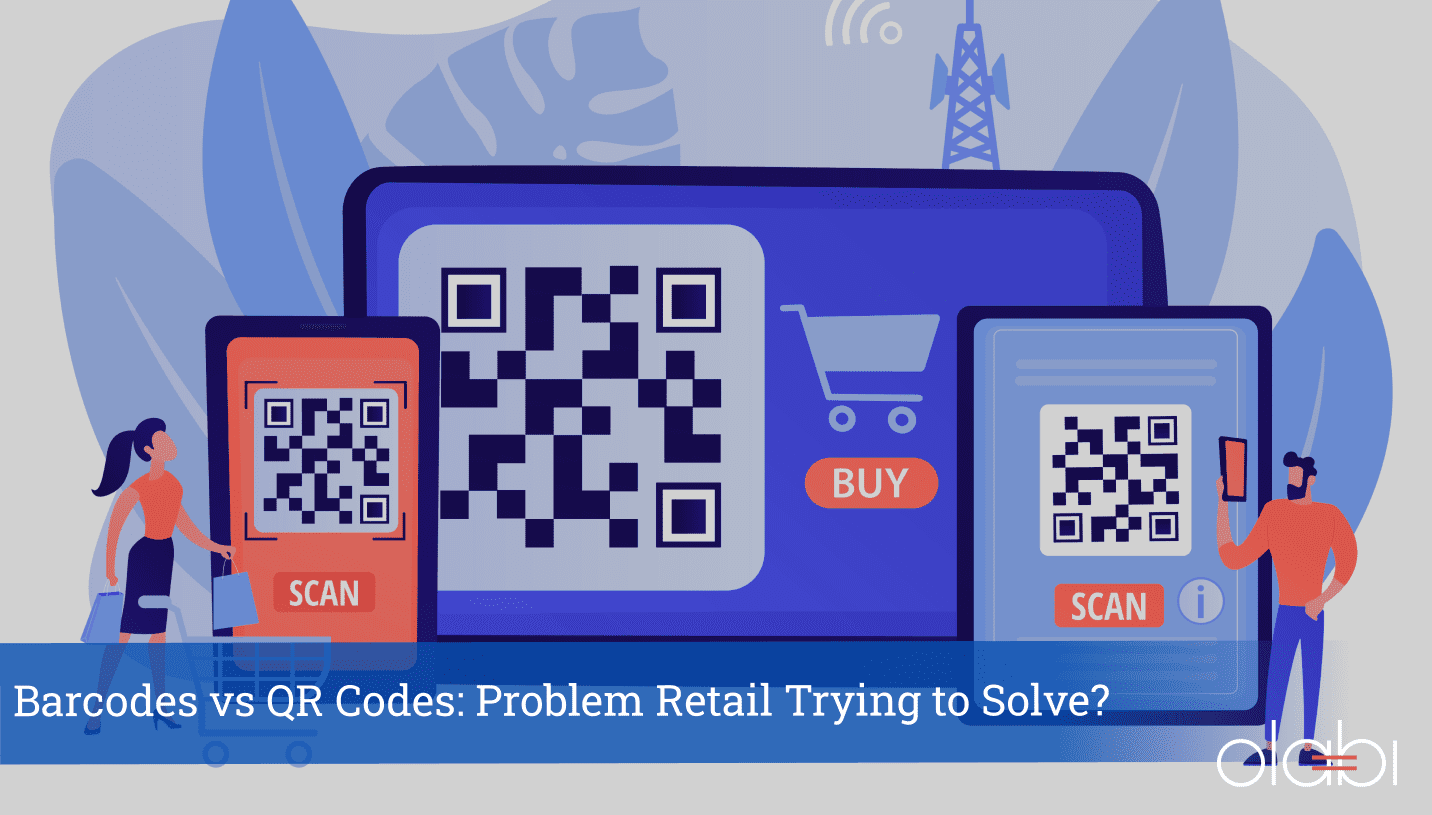
Barcodes vs QR Codes: What Problem Is Retail Really Trying to Solve?
Walk into almost any store today and you’ll notice QR codes everywhere, on product packaging, shelf labels, receipts, and even storefronts. Their growing visibility has naturally sparked a question across the retail industry: are QR codes replacing barcodes?
Barcodes, after all, have been around for decades. They work quietly, efficiently, and rarely draw attention to themselves. In contrast, QR codes feel modern and interactive, closely tied to smartphones, digital payments, and on-demand information. This contrast has led to a common perception that barcodes are outdated, and that QR codes represent the “next generation” of retail scanning.
That assumption follows a familiar pattern in technology thinking: when something new becomes popular, it must be replacing what came before. But retail decisions are rarely that simple. What appears to be a technology shift is often a signal of a deeper change in how retail operates and what it needs to deliver.
This discussion, therefore, isn’t really about barcodes vs QR codes. It’s about the problems modern retail is trying to solve, speed, information, connection, and complexity and why different tools are being used to address different parts of that challenge.
What Barcodes Were Originally Designed to Solve
Barcodes were created to solve a very specific retail problem: how to move products through stores faster and more accurately. At a time when retail scale was increasing and manual processes were slowing things down, barcodes introduced speed and reliability at the checkout counter. A quick scan reduced human error, shortened queues, and made transactions predictable.
Beyond checkout, barcodes became the backbone of inventory and billing accuracy. They enabled retailers to track products consistently, from warehouse to store shelf, without relying on manual entries. This consistency allowed retailers to reconcile stock, manage replenishment, and maintain pricing integrity across locations.
Equally important was standardisation. Barcodes created a shared language across suppliers, distributors, stores, and retail systems. Everyone read the same code the same way, regardless of geography or store format. This standardisation made scale possible.
Crucially, barcodes were never designed with customers in mind. They were built for machines, scanners, and backend systems. Their job was not to communicate information, tell stories, or engage shoppers, it was to enable transactions to happen quickly and accurately.
At their core, barcodes solved one problem exceptionally well: transaction efficiency at scale.
Why QR Codes Entered the Retail Conversation
QR codes entered retail from a very different direction. Their rise closely followed the widespread adoption of smartphones and the growing comfort with self-service behaviour. Suddenly, customers were carrying powerful scanners in their pockets, capable of accessing information instantly.
Unlike barcodes, QR codes can store and link to far more information. This made them useful for scenarios where a single identifier wasn’t enough. Retailers began using QR codes to bridge the gap between physical products and digital content, something barcodes were never meant to do.
As a result, QR codes started appearing in use cases beyond checkout. They were used to share product details, ingredients, care instructions, and sustainability information. They became a natural fit for digital payments, especially in markets where QR-based payments gained rapid adoption. Over time, they also evolved into tools for engagement, connecting customers to reviews, loyalty programs, warranties, and post-purchase journeys.
What QR codes addressed was not speed, but access. They enabled interaction, discovery, and context, giving customers more information when and where they wanted it.
In essence, QR codes weren’t introduced to replace barcodes. They emerged to solve a different problem altogether: providing context and interaction in an increasingly connected retail environment.
The Real Problem Retail Is Trying to Solve Today
Retail today is not just more digital than it was before, it is significantly more complex. Stores no longer operate as isolated sales points. They are part of a wider ecosystem that includes online channels, marketplaces, warehouses, delivery partners, and post-purchase touchpoints. Each of these adds expectations, dependencies, and data.
Customers, meanwhile, expect two things that often compete with each other: speed and information. They want quick checkouts and immediate availability, but they also want product details, transparency, and reassurance before and after they buy. What once happened across separate moments now needs to happen seamlessly in the same experience.
Retail teams face a similar tension. On one side is the need for efficiency, fast billing, accurate inventory, and smooth daily operations. On the other is the need for visibility, understanding what is selling, where gaps exist, and how customers are engaging across channels.
The real challenge retail is trying to solve is not choosing between scanning technologies. It is connecting transactions with context, linking fast operational processes with the information, insight, and engagement that modern retail demands.
Why This Isn’t a “Barcode vs QR Code” Decision
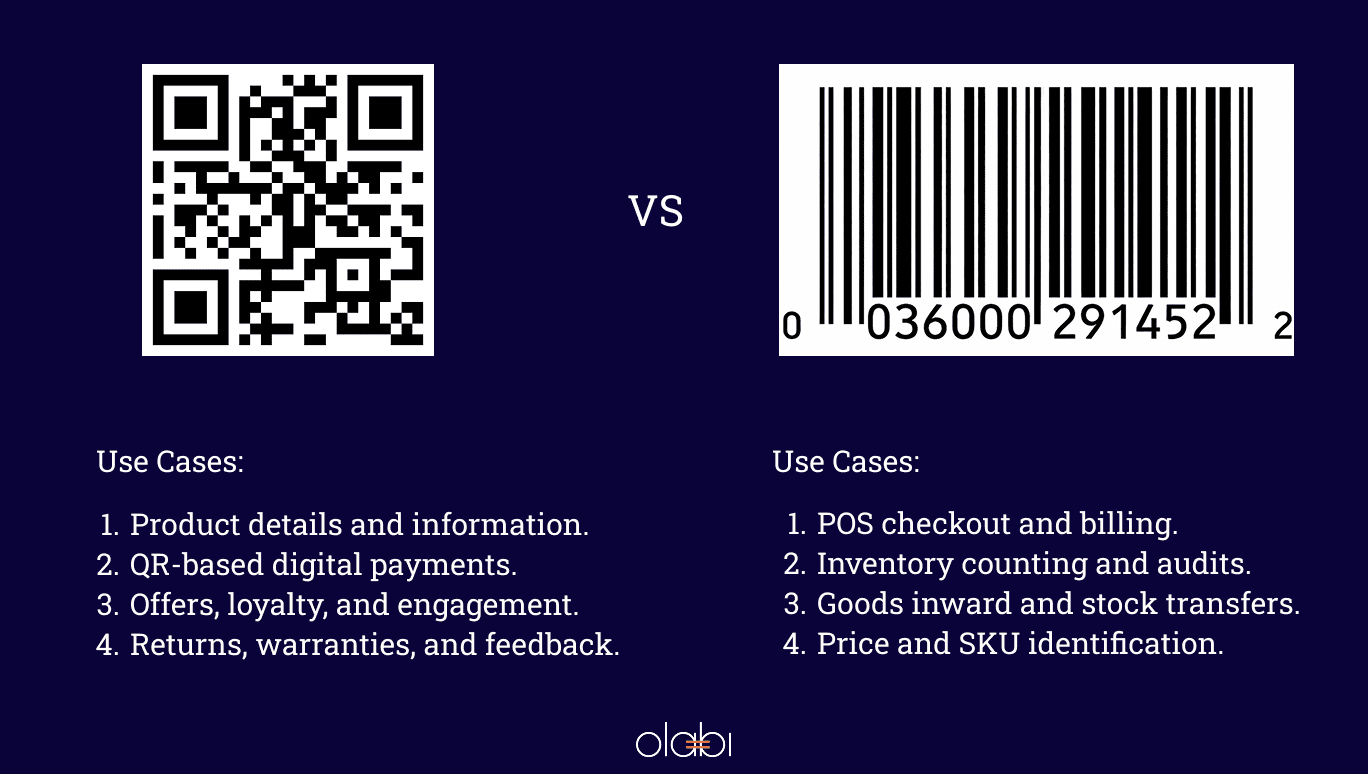
Framing this shift as a choice between barcodes vs QR codes misses the point. These tools were designed to solve fundamentally different problems, and they continue to do so.
Barcodes remain optimised for operational speed. They are fast, reliable, and deeply embedded in checkout, inventory, and supply chain workflows. QR codes, on the other hand, are designed for human interaction. They exist to be seen, scanned intentionally, and used as gateways to information and digital experiences.
Rather than replacing one with the other, retailers are increasingly layering capabilities. The same product can carry a barcode for systems and a QR code for customers, each serving its purpose without conflict.
This shift is not a sign that older technology has failed. It reflects how retail itself has evolved. As expectations grow and experiences become more connected, retailers are adopting multiple tools to address multiple needs, without forcing one solution to do everything.
What This Shift Signals About Modern Retail
The growing use of both barcodes and QR codes signals a broader change in how retail functions today. Products are no longer just physical items on shelves, they are becoming digital touchpoints. A single product can now carry operational data for systems, as well as contextual information for customers, depending on how it is accessed.
Stores, too, are evolving beyond their traditional role as checkout destinations. They are becoming spaces where discovery, decision-making, and post-purchase interactions take place alongside transactions. Codes placed on shelves, packaging, or receipts reflect this shift, enabling interactions that extend beyond the moment of payment.
At the same time, the line between operations and customer experience is beginning to blur. Decisions made for efficiency, such as how products are identified, tracked, and scanned, now have a direct impact on how customers engage with the brand. What was once purely operational is increasingly visible to the shopper.
As a result, product codes now serve multiple stakeholders at once. Store teams rely on them for speed and accuracy. Systems depend on them for consistency and control. Customers use them as gateways to information, reassurance, and engagement. This shared role highlights how modern retail is less about isolated functions and more about connected experiences built on the same underlying foundations.
Conclusion: Evolution, Not Replacement
Barcodes continue to play a critical role in core retail operations. They remain unmatched when it comes to speed, accuracy, and standardisation at scale. For the fundamental mechanics of retail, billing, inventory management, and supply chain efficiency, barcodes are still indispensable.
QR codes, on the other hand, expand what products and stores are able to communicate. They enable access to information, interaction, and engagement, helping retailers bridge the gap between physical products and digital experiences. Their value lies not in replacing existing systems, but in adding new layers of meaning and connection around them.
The real transformation underway is not about scanning technology. It is about how retail thinks about information flow, who needs it, when they need it, and how seamlessly it moves across systems, teams, and customers.
Seen through this lens, the debate is no longer about barcodes vs QR codes or which one will win. The more important question for retailers is this: what problems does modern retail need to solve next, and how can the right tools work together to solve them?
At Olabi, we believe modern retail systems should be built to support both operational efficiency and meaningful customer interaction, without forcing retailers to choose one over the other.
If you’d like to see how this approach comes together in practice, you can schedule a demo with Olabi and explore how unified retail operations can scale without added complexity.
Share This Story, Choose Your Platform!
About the Author: Olabi

