
Olabi Sutras
7 Retail Integrations That Power Omnichannel Success
Modern retailers have invested heavily in omnichannel capabilities. They operate across physical stores, eCommerce platforms, marketplaces, mobile apps, warehouses, and fulfillment networks. Yet despite these investments, many retailers still struggle to deliver truly seamless customer experiences.
The reason is simple: having the right systems is not enough. Those systems must be connected.
Today’s customers expect inventory visibility, consistent pricing, flexible fulfillment options, and personalized experiences regardless of where they choose to shop. Behind the scenes, these experiences rely on effective Retail Integration, the ability for different retail systems to exchange data in real time and operate as a connected ecosystem.
According to industry research, most shoppers interact with multiple channels before making a purchase. However, many retailers still operate with disconnected systems that create inventory inaccuracies, fulfillment delays, and fragmented customer experiences.
In this blog, we explore seven critical retail integrations that help retailers build successful omnichannel operations and deliver seamless customer experiences at scale.
Why Retail Integrations Fail Before Omnichannel Begins
Before discussing the integrations retailers need, it is important to understand why many integration projects fail.
One common issue is the use of point-to-point integrations. While these connections may work initially, they often become difficult to maintain as retailers add new systems or vendors.
Another challenge is batch synchronization. When inventory, orders, or customer data are updated only at scheduled intervals instead of in real time, discrepancies quickly emerge across channels.
Finally, many retailers lack a unified data layer. Different systems store different versions of the same information, resulting in duplicate customer records, inaccurate inventory counts, and inconsistent reporting.
The most effective retail integration strategies focus on creating a connected ecosystem where data flows seamlessly between systems, enabling real-time visibility across the organization.
1. POS and E-Commerce Platform Integration
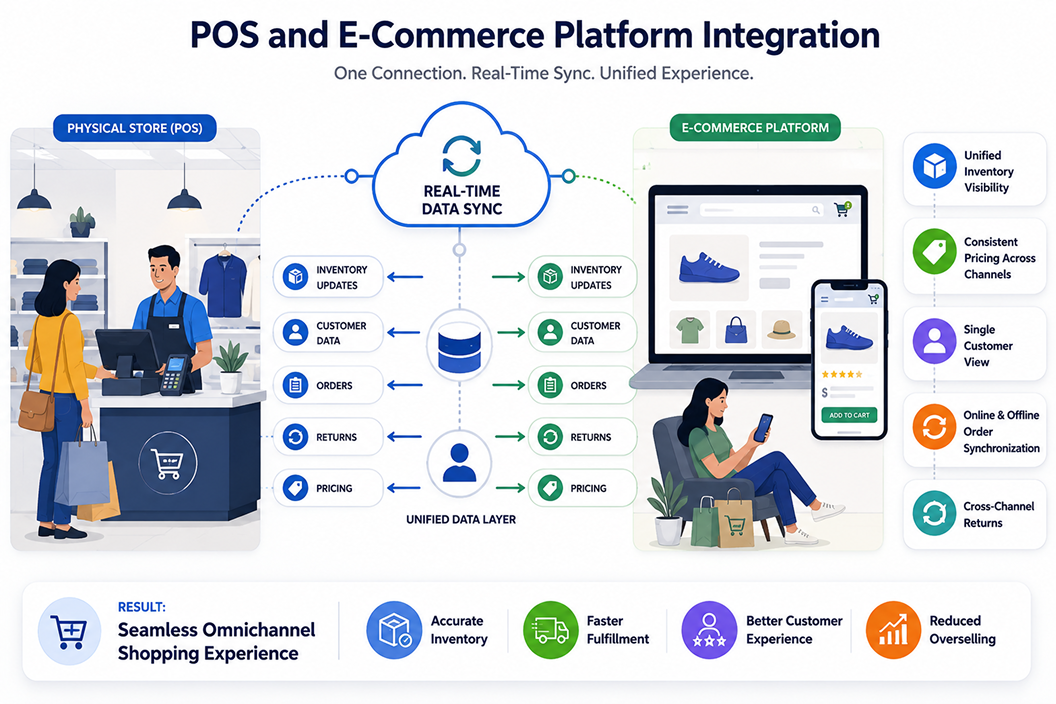
This is the foundation of omnichannel retail.
When physical stores and online channels operate independently, retailers struggle to maintain inventory accuracy and provide consistent customer experiences.
A strong integration ensures that inventory updates instantly across channels, online orders are visible to store teams, and customer purchase history remains unified regardless of where the transaction occurs. It also enables services such as buy online, pick up in store (BOPIS) and cross-channel returns.
Without this integration, retailers often face overselling, pricing inconsistencies, and duplicate customer profiles.
2. Inventory Management and Warehouse Management Integration
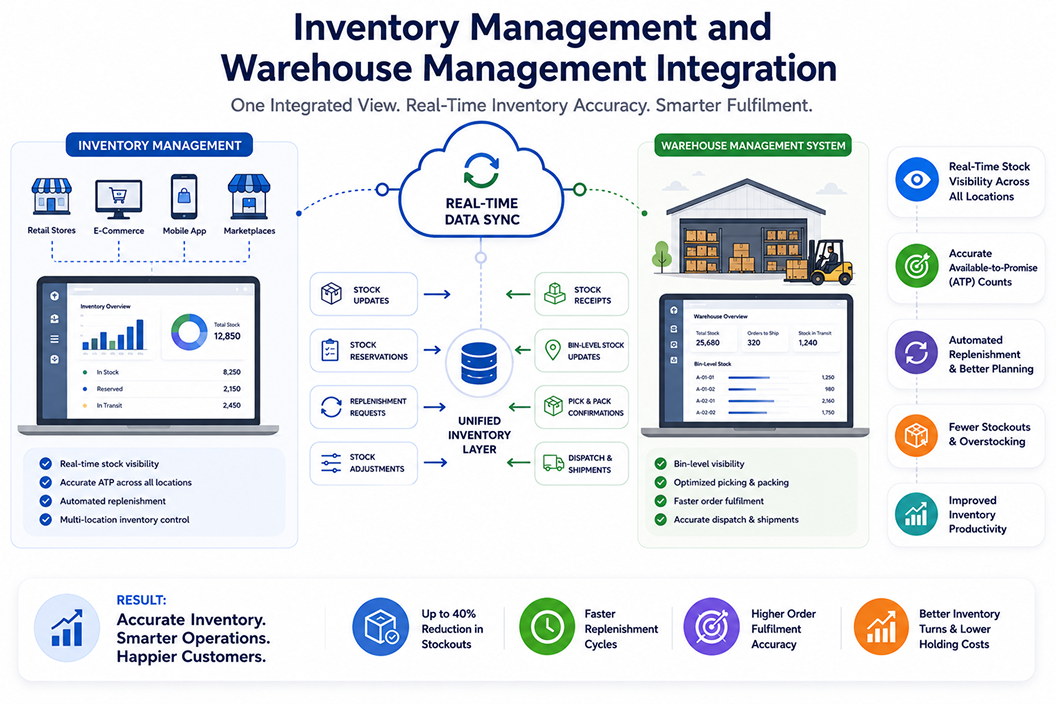
Inventory visibility is only as good as the systems supporting it.
Integrating inventory management with warehouse operations enables retailers to maintain accurate stock visibility across stores, warehouses, and goods in transit. It also supports automated replenishment and more accurate fulfillment decisions.
When these systems operate separately, stock discrepancies become common, replenishment cycles slow down, and customers may see inaccurate availability information.
For retailers managing multiple locations, this integration is essential for reducing stockouts and improving fulfillment accuracy.
3. OMS and Logistics Provider Integration
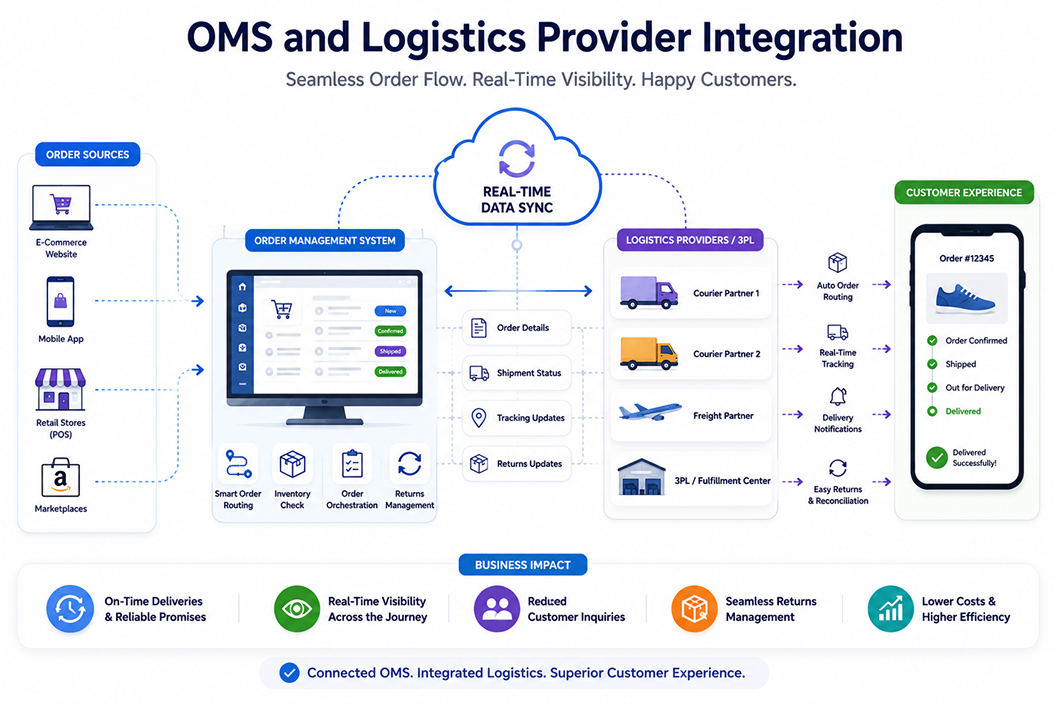
Customers judge retailers based on whether delivery promises are fulfilled.
An Order Management System (OMS) must work closely with logistics providers and third-party fulfillment partners to ensure smooth order execution.
Effective integration enables automatic order routing, shipment creation, real-time tracking updates, delivery status synchronization, and streamlined returns management.
When integration gaps exist, retailers often experience delayed shipments, poor visibility into delivery status, and increased customer service inquiries.
This integration directly impacts customer satisfaction and operational efficiency.
4. CRM and POS/E-Commerce Integration
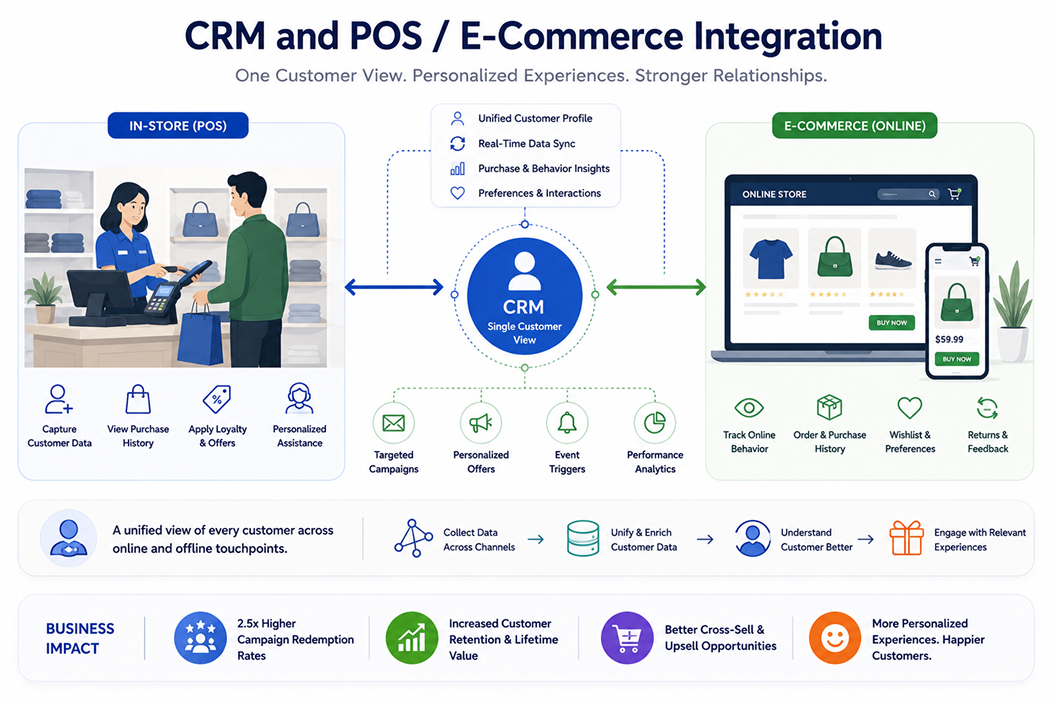
Customer experience depends on customer understanding.
Retailers generate customer data across stores, websites, mobile apps, and marketing channels. Without proper integration, this information remains fragmented and difficult to use.
Connecting CRM systems with POS and eCommerce platforms creates a unified customer view. This enables personalized engagement, more relevant promotions, improved customer service, and better marketing performance.
Store associates can access customer purchase history, while marketing teams gain visibility into both online and offline behaviors.
The result is a more personalized and consistent customer experience.
5. Loyalty Platform Integration Across Channels
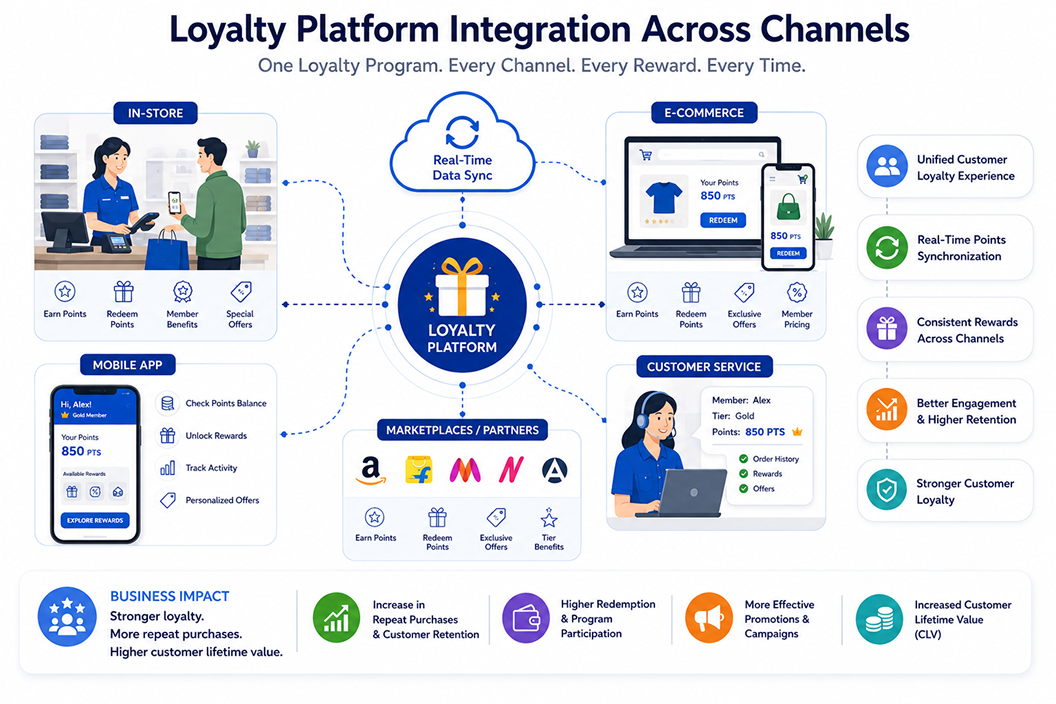
Modern loyalty programs must function seamlessly across every customer touchpoint.
Customers expect to earn and redeem rewards regardless of whether they shop online, in-store, or through mobile applications.
A well-integrated loyalty platform ensures that points, rewards, membership tiers, and promotions remain synchronized in real time across channels.
Without this integration, customers often encounter delays in point updates, inconsistent rewards experiences, and confusion regarding loyalty status.
Cross-channel loyalty experiences help retailers strengthen customer relationships and encourage repeat purchases.
6. Marketplace and OMS/Inventory Integration
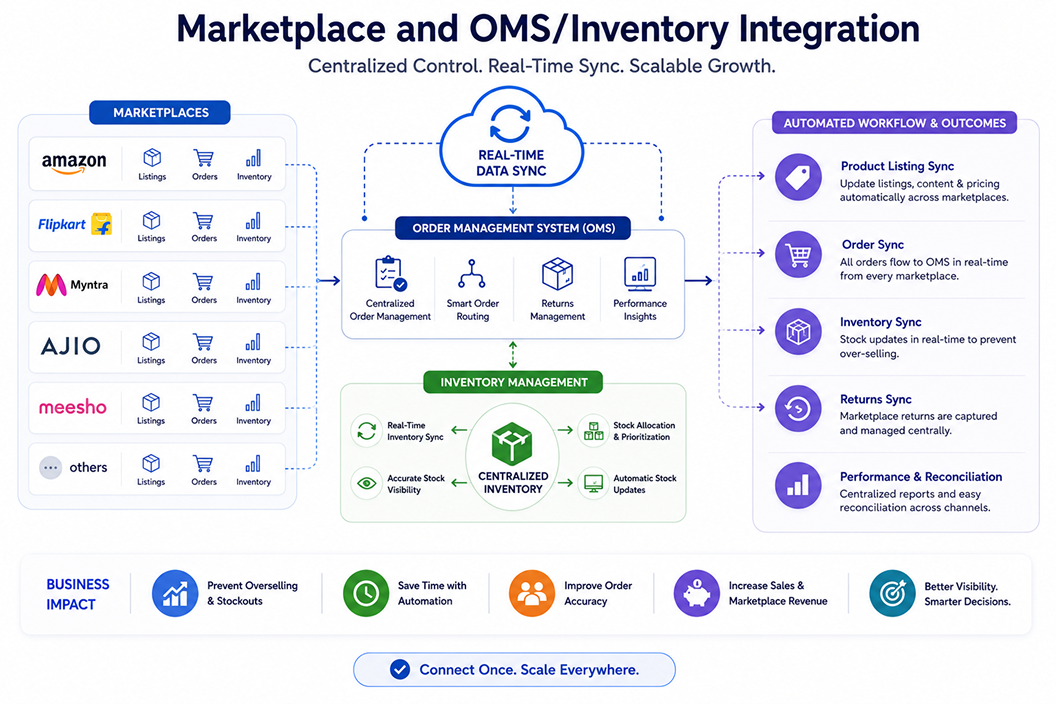
Marketplaces have become a major revenue channel for many retailers.
Managing inventory and orders across platforms such as Amazon, Myntra, Ajio, and other marketplaces requires strong retail integration capabilities.
A connected system centralizes order management, synchronizes inventory availability, updates product listings automatically, and streamlines returns processing.
Without integration, retailers risk overselling products, maintaining inaccurate listings, and spending significant time on manual reconciliation activities.
As marketplace operations grow, integration becomes increasingly important for maintaining efficiency and profitability.
7. ERP and POS/OMS Integration
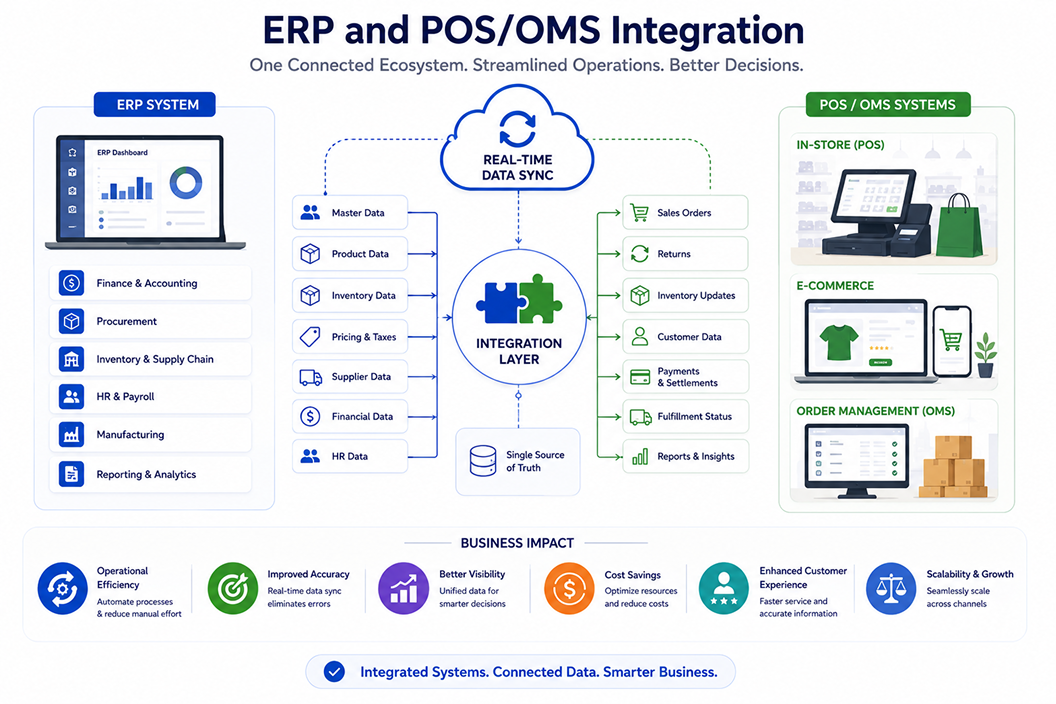
Every transaction ultimately impacts the financial health of the business.
Integrating ERP and accounting systems with POS and order management platforms ensures that sales, returns, discounts, taxes, and inventory adjustments are reflected accurately across financial records.
This integration improves reconciliation, financial reporting, compliance, and operational transparency.
Without it, finance teams often spend considerable time reconciling data across multiple systems, increasing the risk of reporting errors and delayed decision-making.
A connected ERP environment enables retailers to operate with greater financial confidence and accuracy.
Which Retail Integrations Should You Prioritize?
| Integration | Business Impact | Priority |
| POS ↔ E-Commerce | Very High | Immediate |
| Inventory ↔ WMS | Very High | Immediate |
| OMS ↔ Logistics | High | Immediate |
| CRM ↔ POS | High | Short-Term |
| Loyalty ↔ Channels | Medium-High | Short-Term |
| Marketplace ↔ OMS | High | Short-Term |
| ERP ↔ POS/OMS | Medium | Mid-Term |
Retailers should prioritize integrations that directly impact customer experience, inventory accuracy, and fulfillment operations before moving on to secondary processes.
Why Pre-Built Integrations Often Outperform Custom Integrations
Many retailers assume custom integrations offer greater flexibility. While this may be true initially, custom integrations often introduce long-term maintenance challenges.
Every software update, API change, or platform upgrade can create new integration issues that require ongoing development resources.
Pre-built integrations, on the other hand, are typically maintained by vendors, tested across multiple deployments, and updated regularly as platforms evolve.
As retail ecosystems become more complex, many organizations are shifting toward unified retail platforms that provide built-in connectivity across critical business functions rather than relying on a growing network of custom integrations.
When evaluating retail technology vendors, retailers should ask:
- Is the integration real-time or batch-based?
- Who maintains the integration when systems change?
- How are failures monitored and resolved?
- Is there visibility into integration health and performance?
The answers often reveal whether an integration strategy will scale effectively over time.
Conclusion
Successful omnichannel retail depends on more than individual systems. It depends on how effectively those systems work together.
From POS and eCommerce integration to inventory visibility, loyalty management, fulfillment coordination, and financial reconciliation, every integration plays a role in delivering seamless customer experiences and efficient retail operations.
Retailers that continue to operate with disconnected systems often face inventory inaccuracies, operational inefficiencies, and fragmented customer journeys. Those that invest in connected retail ecosystems gain better visibility, faster decision-making, and stronger omnichannel execution.
At Olabi, we help retailers simplify Retail Integration through a unified platform that connects stores, eCommerce, inventory, warehouse operations, marketplaces, customer engagement, loyalty, and fulfillment processes. By bringing critical retail functions together within a connected ecosystem, retailers can reduce complexity and deliver the seamless experiences modern customers expect.
If your retail technology stack feels more disconnected than connected, it may be time to rethink the foundation. Schedule a demo with Olabi to explore how a unified retail platform can help strengthen your omnichannel strategy and simplify retail integration.
Share This Story, Choose Your Platform!
About the Author: Olabi

