
Olabi Sutras
Understanding the Modern Retail Customer: Expectations, Behaviors, and Trends
The Modern Retail Customer has fundamentally changed. Today’s shoppers are more informed, connected, and empowered than ever before. Before making a purchase, they often research products online, compare prices across multiple retailers, read reviews, check inventory availability, and evaluate delivery options. By the time they interact with a brand, they have already completed a significant portion of their buying journey.
At the same time, customer expectations continue to rise. Shoppers expect seamless experiences across online and offline channels, personalized interactions, real-time product availability, flexible fulfillment options, and fast service at every touchpoint. They are no longer comparing your brand solely against direct competitors; they are comparing every retail experience against the best experience they have had anywhere.
For retailers, this shift is not a temporary trend, it represents a fundamental change in consumer behavior. Traditional approaches that rely on disconnected channels, limited visibility, and generic customer engagement are becoming increasingly ineffective in an environment where convenience, speed, and relevance influence purchasing decisions.
Understanding how customer expectations are evolving is now critical for retail success. Retailers that can adapt their operations, technology, and customer experience strategies to meet these expectations will be better positioned to build loyalty, improve customer satisfaction, and drive long-term growth.
In this blog, we explore the five key trends shaping the Modern Retail Customer and examine what retailers need to change today to remain competitive in an increasingly connected retail landscape.
Trend 1: Modern Retail Customer expect a seamless omnichannel experience

Modern shoppers no longer draw a line between online and offline. They browse on a phone during a commute, check availability on a laptop at home, and complete the purchase in-store or the other way around. The channel is irrelevant to them. Consistency is everything.
Customers now expect to return a product purchased online at a physical location without friction. They expect the promotion they saw on the app to be honored at the checkout counter. They expect a single, unified experience, not a collection of siloed ones that feel like they belong to different companies.
Retailers need connected inventory systems, unified customer data, and synchronized pricing across all channels. Without that backbone, the customer experience fractures at every handoff and customers notice.
Trend 2: Convenience has become a purchase driver
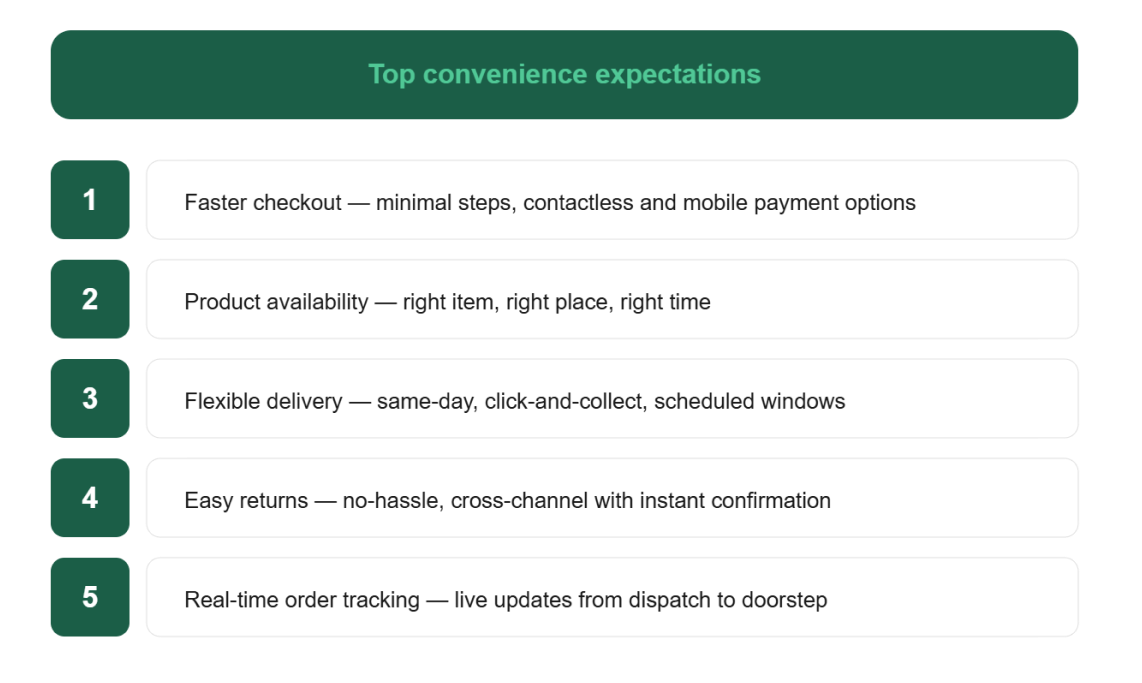
Speed and ease are no longer differentiators, they are baseline expectations. When a customer can complete an entire purchase in three taps on a competitor’s app, friction becomes a reason to leave, not just an inconvenience.
Convenience today means more than fast delivery. It means flexible fulfillment options like click-and-collect and same-day shipping. It means real-time order tracking that does not require calling customer service. It means frictionless returns that do not require a receipt, a printer, or a long queue at a service desk.
Retailers that reduce operational friction, through better connected systems, streamlined checkout flows, and flexible fulfillment infrastructure, will win on convenience. Those that do not will consistently lose customers to whoever makes the experience one step easier.
Trend 3: Customers expect personalization
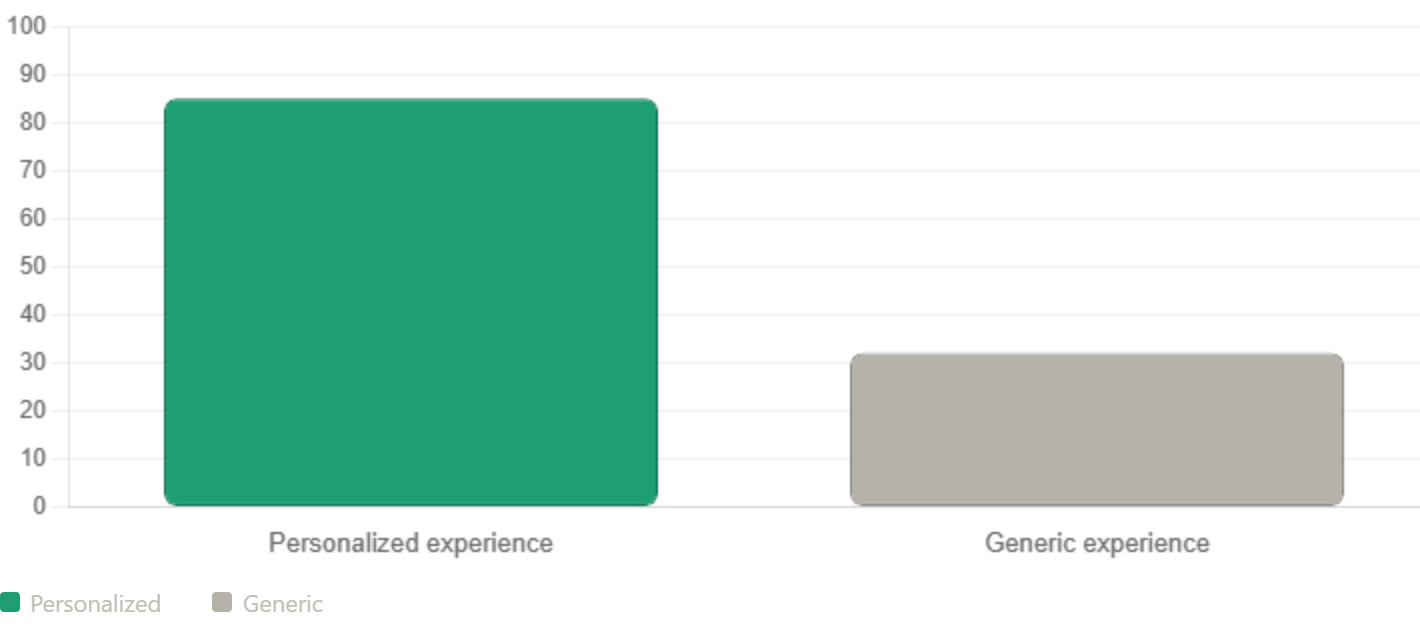
The era of the generic promotion is fading fast. Customers are flooded with marketing messages daily, and blanket discounts that do not reflect their preferences are increasingly ignored, unsubscribed from, or filtered out entirely.
What actually drives engagement is relevance. Modern customers expect a brand to know that they buy running gear every spring, that they prefer a particular size or brand, or that they browsed a product twice without purchasing it. They expect to be spoken to as individuals, not as a demographic bucket or a line in a mailing list.
Retailers need to leverage unified customer data and retail analytics to move from broadcast marketing to targeted, behavior-driven communication. The technology to do this exists and is accessible. What many retailers lack is not the tools, it is the organizational willingness to invest in putting them to use.
Trend 4: Product availability directly impacts customer experience
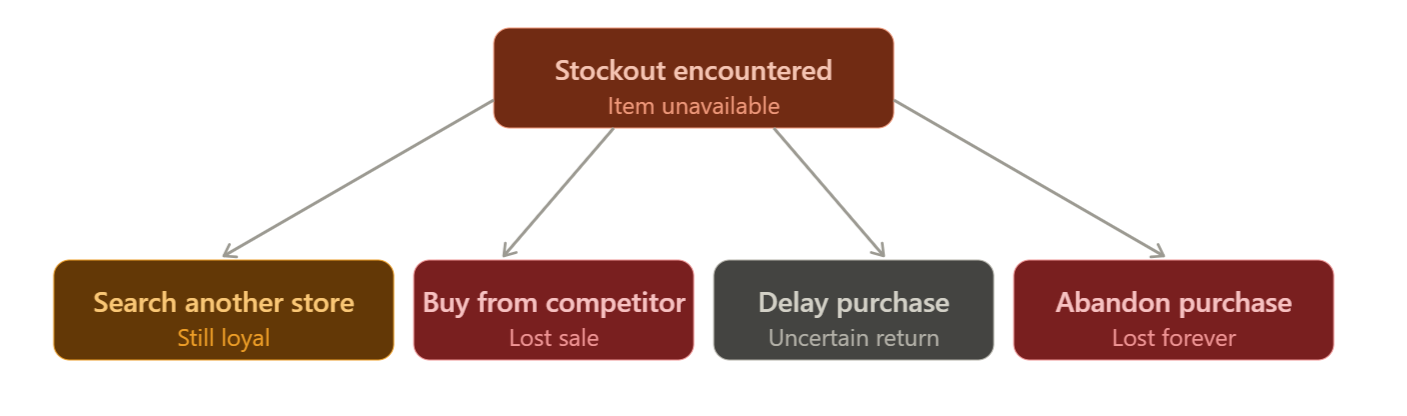
Nothing breaks a shopping experience faster than a stockout. A customer who drives to a store or adds an item to their online cart, only to find it unavailable, does not simply wait. They search for an alternative, and that alternative is often a competitor.
Inventory visibility is no longer a back-office concern, it is a front-line customer experience issue. When a customer can see real-time stock levels before making a trip, or receives an instant notification when an out-of-stock item is replenished, the retailer builds trust rather than losing it.
Retailers that invest in real-time stock visibility, smarter replenishment planning, and coordinated fulfillment across locations will significantly reduce the number of customers lost to a stockout. Those that rely on outdated inventory systems will keep discovering those losses only after the fact.
Trend 5: Speed influences customer decisions
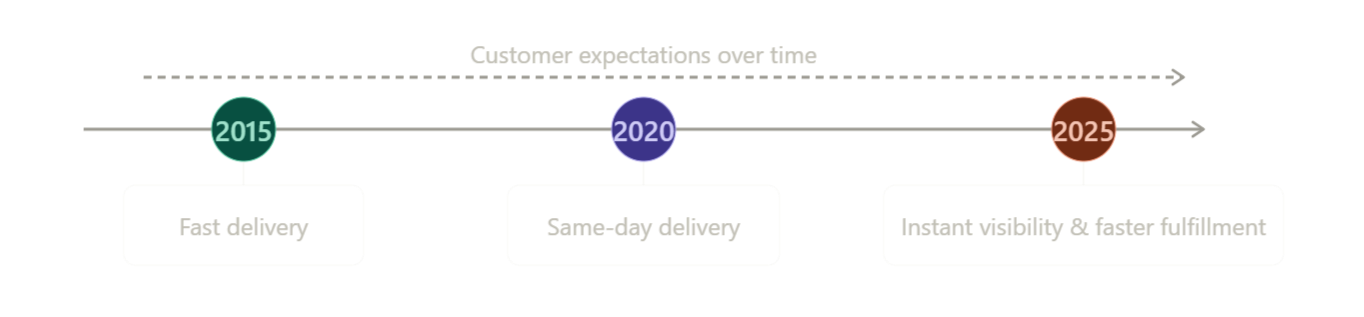
The rise of quick commerce has permanently recalibrated expectations around delivery. Same-day delivery, once considered a premium offering reserved for urgent orders, is now a baseline expectation in many categories. Customers expect to know exactly when their order will arrive, down to the hour, and they expect it to arrive fast.
Speed is not just about logistics. It is about confidence and control. A customer who can see exactly where their order is at every stage feels informed and in control of the experience. A customer who receives a vague “3 to 5 business days” estimate is already uncertain and uncertainty erodes trust.
Retailers that invest in connected warehouse operations, distributed inventory positioning, and omnichannel fulfillment capabilities will be better placed to meet these accelerating expectations and to turn delivery speed into a genuine competitive advantage rather than a constant source of customer complaints.
Key takeaways: What retailers must do next
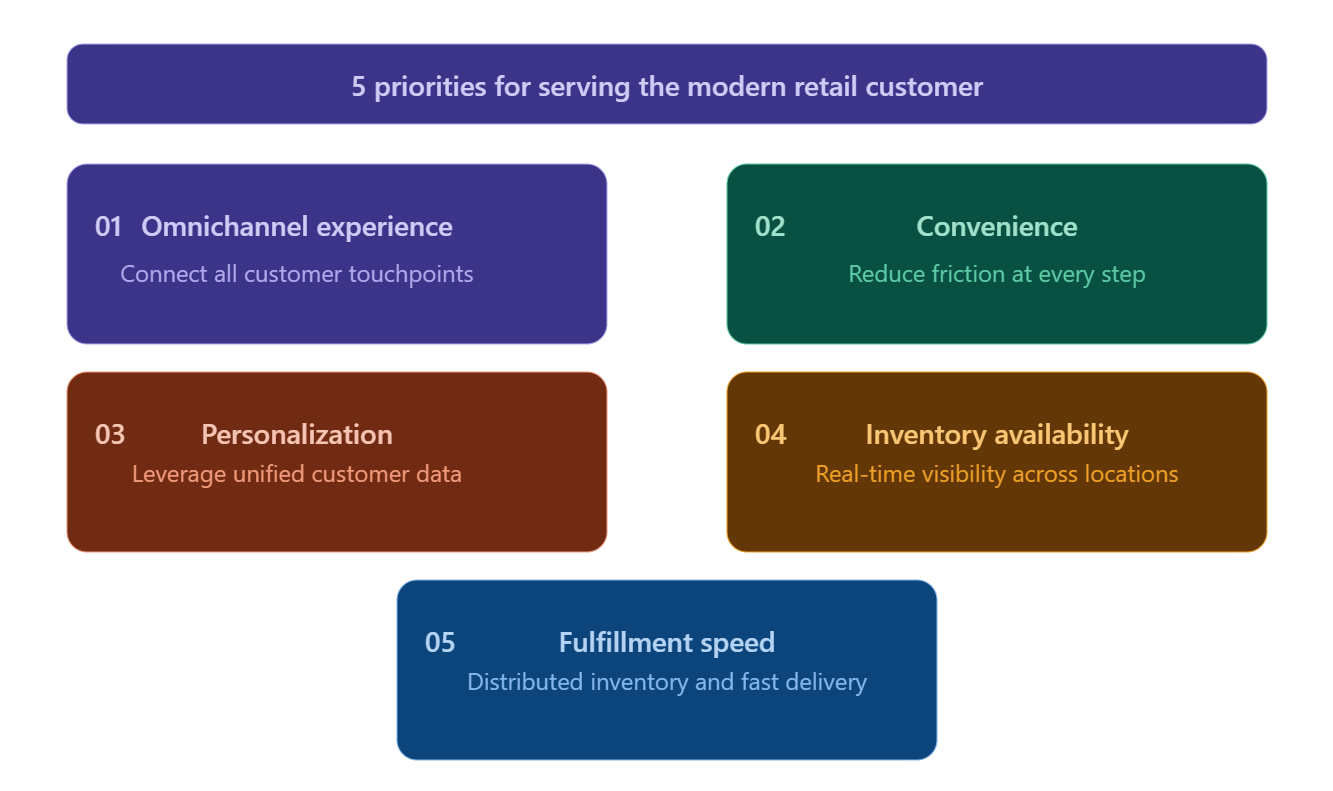
The five trends above point to a single underlying challenge: retail operations must become as connected, responsive, and customer-aware as the shoppers they serve.
Retailers that build connected omnichannel experiences, invest in real-time inventory visibility, harness customer data for personalization, streamline fulfillment operations, and actively reduce friction across the customer journey will not just keep up with modern retail customer expectations, they will set the standard for what good retail looks like.
Conclusion
The modern retail customer is not simply more demanding, they are more informed, more empowered, and more willing to switch than any previous generation of shoppers. They will choose convenience over familiarity, relevance over habit, and speed over loyalty if a competitor makes it easier.
Retailers that align their operations, technology, and customer engagement strategies with these five realities will be better positioned to drive genuine loyalty, higher customer satisfaction, and long-term competitive advantage. Those that treat these trends as future concerns may find themselves struggling to keep pace with customers whose expectations have already evolved.
Meeting these expectations requires more than just customer-facing improvements. It demands connected retail operations, real-time inventory visibility, seamless omnichannel experiences, personalized engagement, and faster fulfillment capabilities working together behind the scenes.
At Olabi, we help retailers deliver these experiences through a unified retail platform that connects stores, eCommerce, inventory, fulfillment, customer data, and omnichannel operations. By enabling retailers to create seamless shopping journeys and operate with greater visibility and agility, Olabi helps brands stay aligned with changing customer expectations while building stronger and more meaningful customer relationships.
The moment to act on these expectations is not when customers start complaining. It is now, before they quietly leave.
If your retail business is looking to enhance customer experience, improve operational visibility, and build stronger customer relationships across channels, schedule a demo with Olabi to discover how connected retail technology can help you meet the expectations of the modern retail customer.
Share This Story, Choose Your Platform!
About the Author: Olabi

